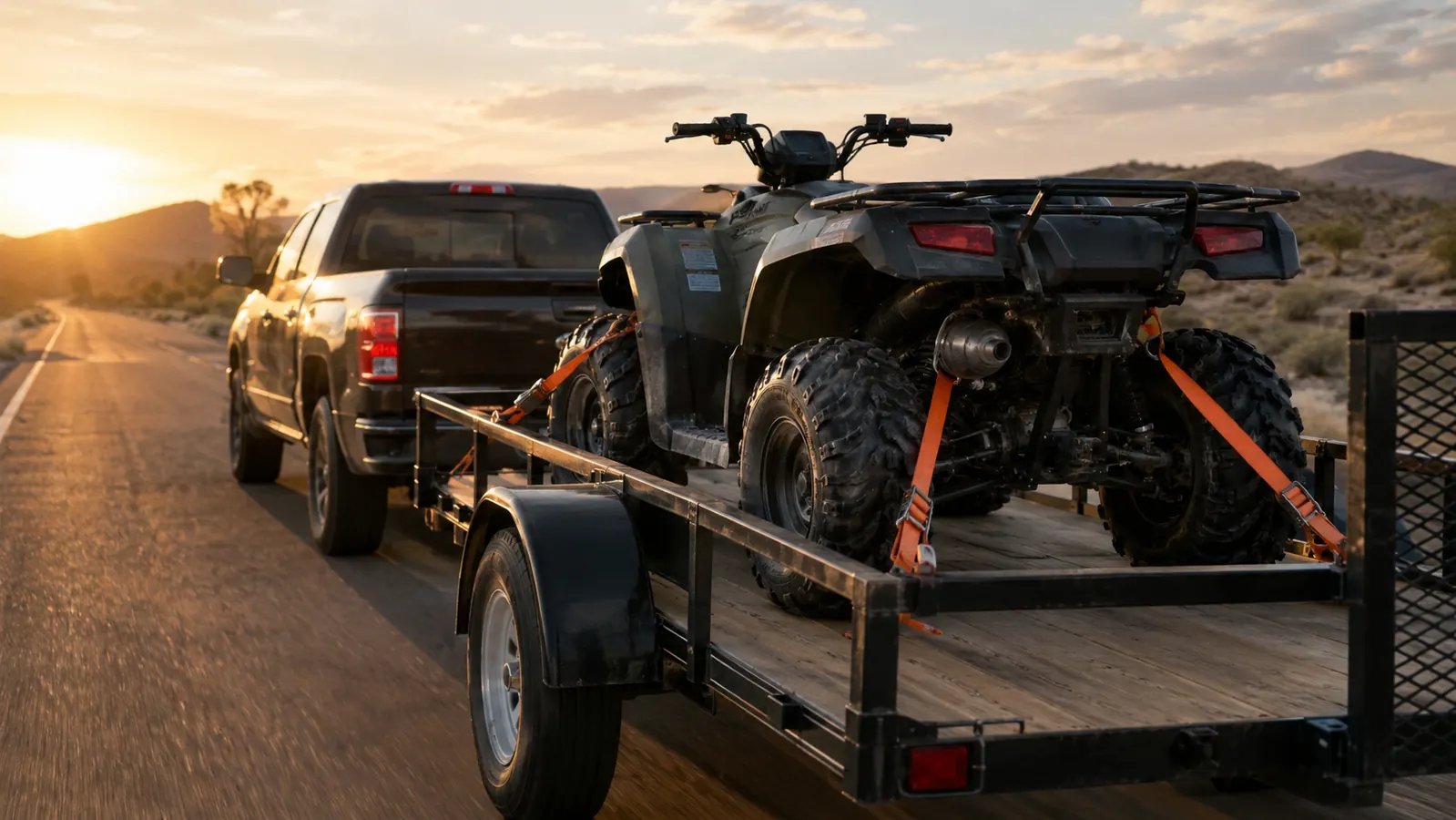
It was a Sunday afternoon in late March, and I was hauling my quad back from a weekend of riding the washes up near the Slate Range when I saw the front wheel move. Not a wobble from the trailer, not a bounce from the road. A real shift, a sideways slide of maybe two inches, while I was doing seventy on the 395. It is the reason I tie the quad down with FORTEM straps on every haul now.
I pulled off at the next exit so fast the truck box slid in the bed. When I walked around to the trailer, the front left strap was hanging loose. The ratchet had backed off a click at a time, working itself open with the vibration, and the other three were not far behind it. Nothing had come off the trailer yet. That was luck, not planning, and I have replayed that moment a hundred times since.
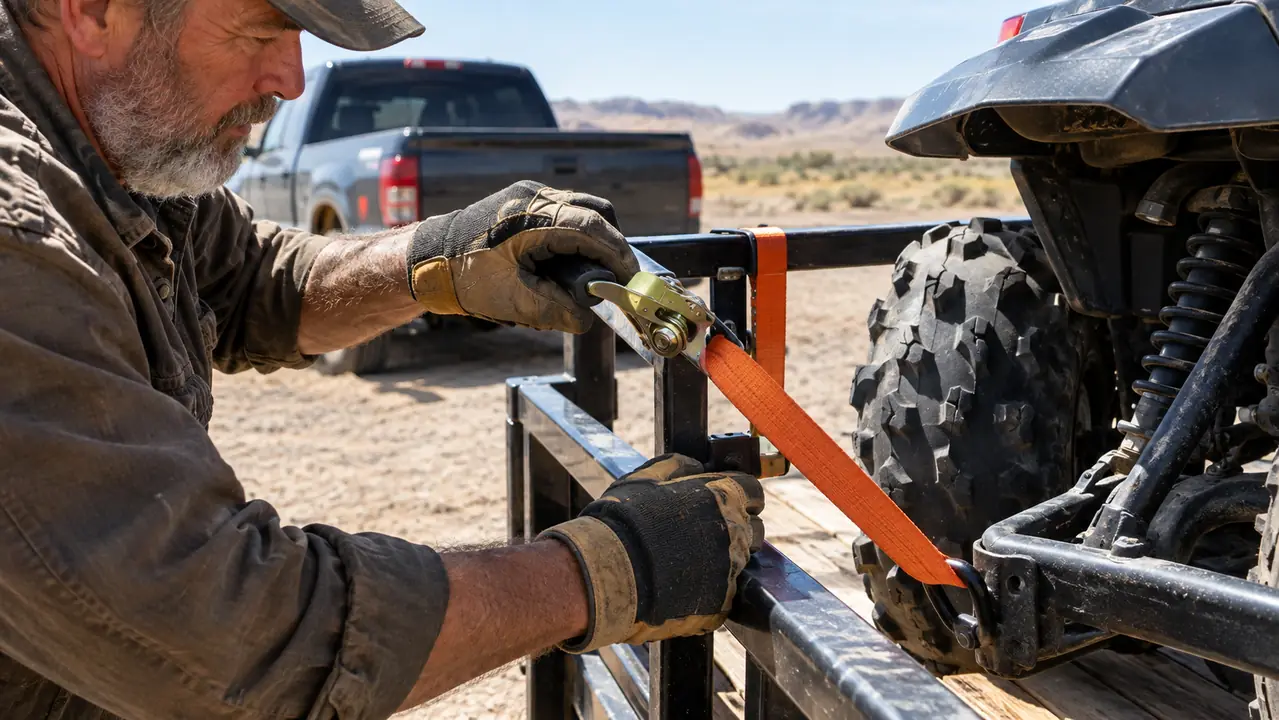
Seven hundred pounds of quad at highway speed is a lot of mass to trust to a strap you have not looked at since last season. I stood on the shoulder with my heart going and looked at what I had actually tied it down with. Old cam straps from a cardboard box in the garage, worn thin where they folded over the tie-down points, hooks that did not quite seat on the trailer rail, and one spot where I had wrapped a strap around a grab bar because the real anchor point had rusted. The strap that let go had been on the front left for two years, same spot every trip, and the webbing had rubbed against the frame until it was down to maybe half its width. I had checked it in the spring and called it good.
The guys I ride with are the same way. We all have a milk crate of straps that get used and rolled up and forgotten until the next load. Nobody inspects them. Nobody knows how old they are. We figure a strap is a strap until the day it is not, and that day usually comes at speed, not in the driveway.
I got the quad retied with every strap I had left, took the back roads home at forty-five, and did not sleep well that night. The next morning I dumped the whole kit on the garage floor and went through it strap by strap with a flashlight, the way I check a weld before I trust it.
Two of the four had webbing frayed where it folded over the hook. One ratchet would not lock unless you held it at just the right angle. The hooks were the thin stamped kind that can straighten under a hard pull, and I have seen what that looks like on a friend's trailer when a load shifted and the hook opened like a paper clip. I tossed the lot in the scrap bin and started reading about ratchet straps the way I read about welding wire: slow, skeptical, and looking for the weak point. I read the reviews on the FORTEM straps for a week before I ordered, and the complaints that came up were the same two or three, about the straps being stiffer than the cheap ones out of the box. That did not bother me. Stiff webbing that holds its shape beats soft webbing that folds and frays.
Nothing had come off the trailer yet. That was luck, not planning.
Don't Learn This One the Way I Did
If your straps have been in the crate since last season, check every inch of webbing before your next haul. When you are ready to replace them, the FORTEM set is the one I trust on every load now.
Amazon Check Today's Price on Amazon →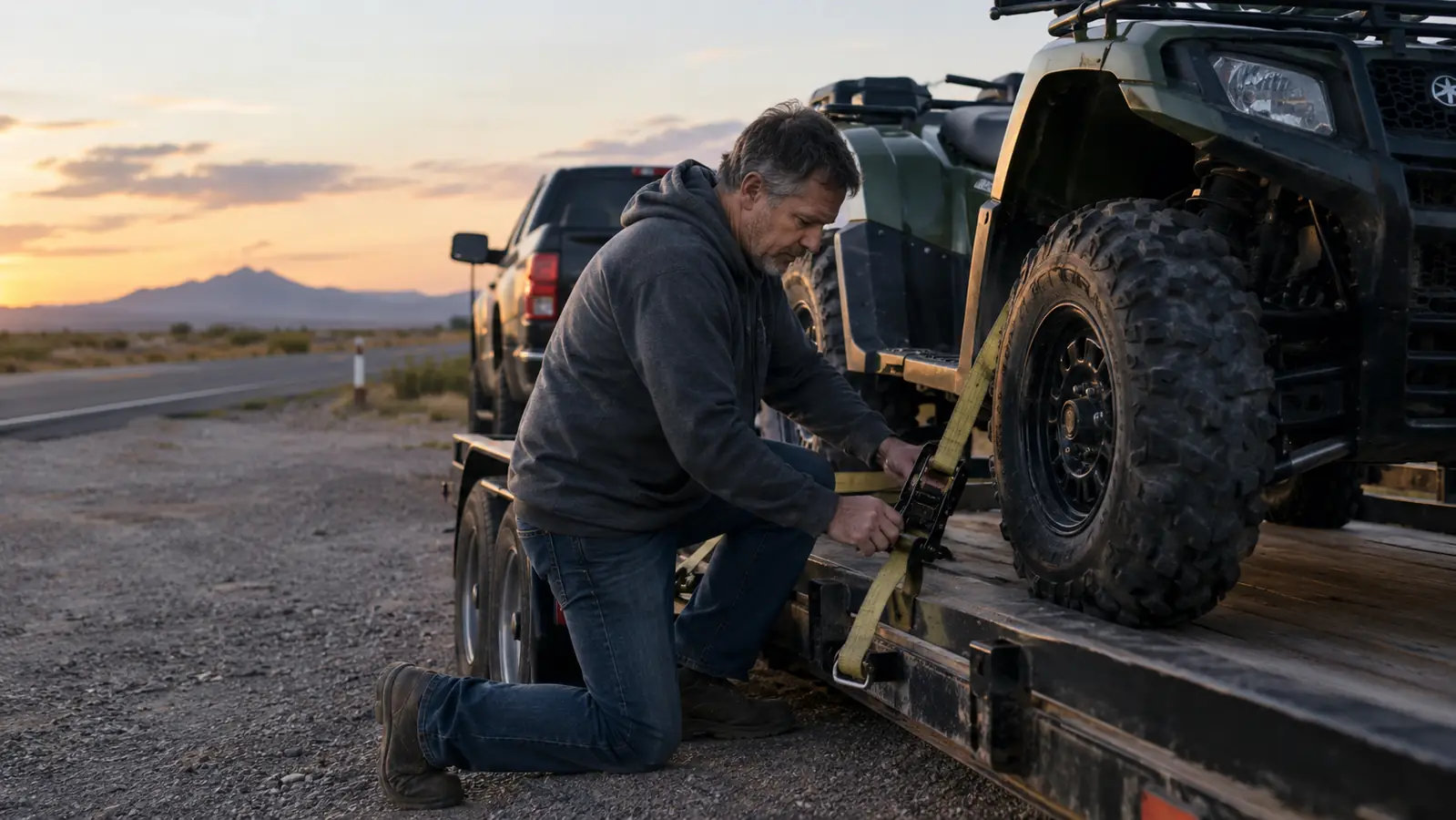
The FORTEM set showed up a few days later. Four straps, 1650 pounds of break strength each, with a ratchet that clicks clean and hooks that seat instead of wobble. I went over the hooks with a magnifying glass because that is what a fabricator does, checking the welds for pitting and thin spots. They were clean. The webbing felt stiff and even, no loose threads at the edges, no soft spots where it had been folded too long.
First trip was a load of camp gear on the quad for a three night ride up in the Inyo country. I ran the straps the way the instructions show, crossed front and back, cinched until the suspension squatted, then gave each ratchet one more click. At the first rest stop I got out and checked them. Not a millimeter of give. The crossing pattern is the part a lot of guys skip, and it is the part that keeps the quad from walking sideways in a hard corner or a gust of wind off a passing rig.
That is the part that sold me. With the old straps I was checking at every stop, and I still missed the one that let go. With these, I check once when I leave and once when I get there, and the load has not moved in the miles between. That is what a tie down is for. You should be able to forget it is there and trust it anyway.
I have put a few thousand miles on that set since March. Desert heat up past a hundred, rain coming down the grapevine, washboard roads that shake the mirrors loose. The webbing has not frayed, the ratchets have not skipped a click, and the hooks have not bent. I checked them again last week before a run down to the river, the same flashlight check I did on the old set, and there was nothing to find. No soft spots, no loose threads, no play in the ratchet. The strap I worried about for years is the one I do not think about at all now.
What I'd Tell You If We Were Sitting at My Kitchen Table
If you are still hauling with the straps that came in a bundle, or the ones that have been in the crate since before the quad was new, go out to the garage tonight and check every inch of webbing, every hook, every ratchet. Run your fingers along the edges and look for fraying where the strap folds. Check the hook welds for pitting. Work the ratchet and make sure it locks on its own. Then buy a set that will hold when it matters. A seven hundred pound machine coming loose at highway speed does not give you a warning. It gives you a bill, a wrecked trailer, and a bad day you will think about every time you hook up after that. The FORTEM set costs what a good tank of diesel costs, and it has paid for itself a dozen times over in the peace of mind of one clean haul after another.
Haul With Straps You Don't Have to Worry About
The FORTEM 4-pack has held my quad solid through a few thousand miles of desert hauling. If you are ready to stop checking at every exit, this is the set to start with.
Amazon Check Today's Price on Amazon →