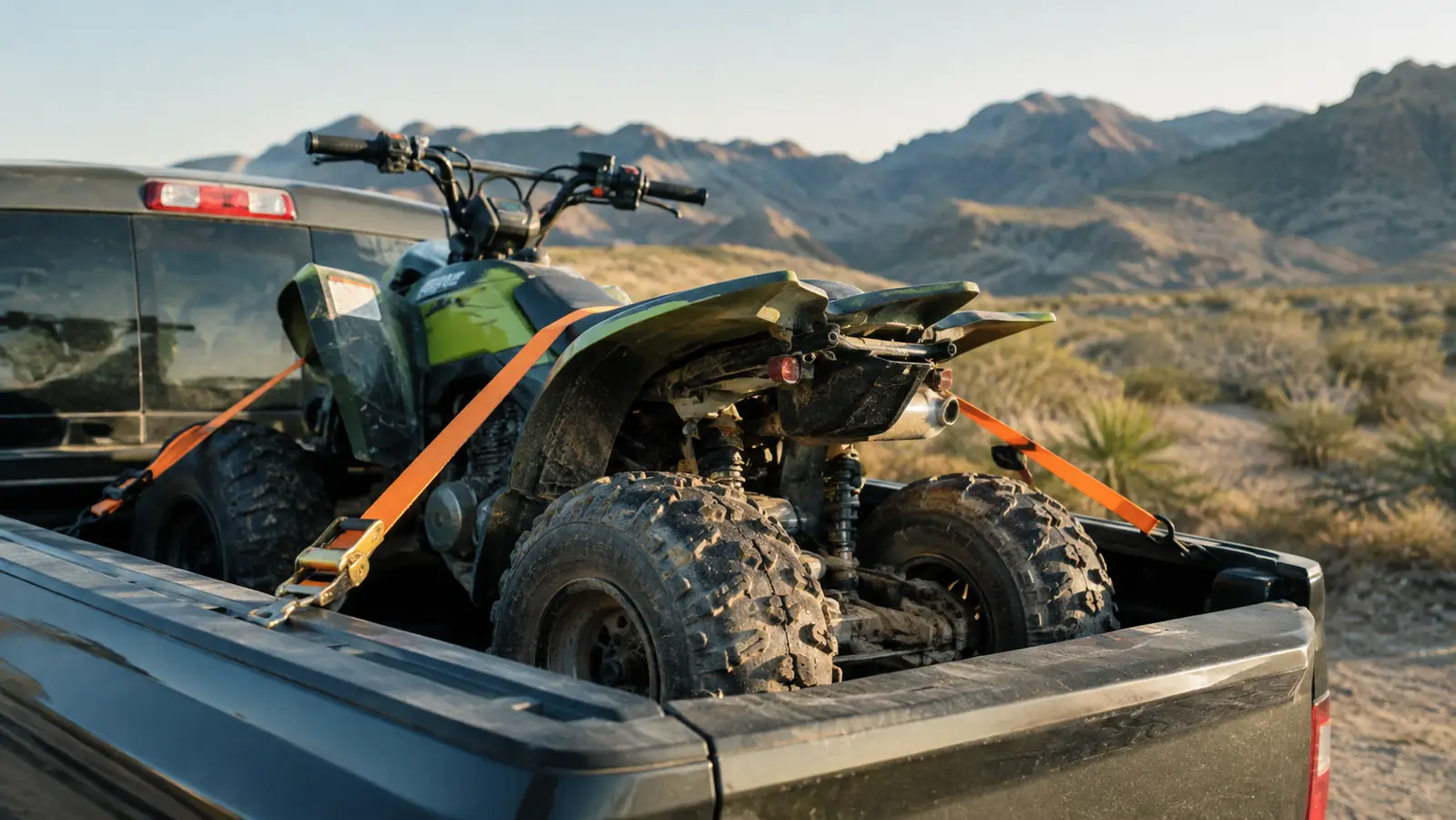
I've spent 40 years hauling stuff in the back of a pickup, and I'll tell you straight: the worst thing you can carry is an ATV held down with bungee cords. I learned that lesson the hard way on a washboard road outside Ridgecrest in 2022, when my Grizzly slid six inches and the whole load shifted. That's when I bought a set of FORTEM ratchet straps, four of them, rated at 1,650 pounds break strength each. Since then I've used them on every trip, and they've earned a permanent spot in the truck.
These aren't the cheap nylon straps that stretch and let everything rattle. FORTEM makes a real tie-down with a metal ratchet, coated hooks, and webbing that doesn't fray after a season. Here are the ten reasons I keep a set in my truck, and why I wouldn't go back to bungees.
Stop Using Bungee Cords on a 700-Pound Machine
A 4-pack of FORTEM ratchet straps gives you the break strength to hold a full-size ATV securely. Check today's price on Amazon.
Amazon Check Today's Price on Amazon →1,650-Pound Break Strength Per Strap
My Grizzly weighs about 700 pounds wet. Four straps at 1,650 pounds each gives me 6,600 pounds of holding force. That's the difference between a strap that snaps and one that holds when the truck hits a pothole. I've had bungees let go on a rough road and watched a cooler bounce out of the bed. That doesn't happen with these. The math is simple: you want at least double the weight of the load in break strength. With four of these, I'm running nearly ten times the weight of the quad. That's the kind of margin that keeps a load secure on a washboard road at 55 miles an hour.
Ratchet Mechanism That Actually Holds
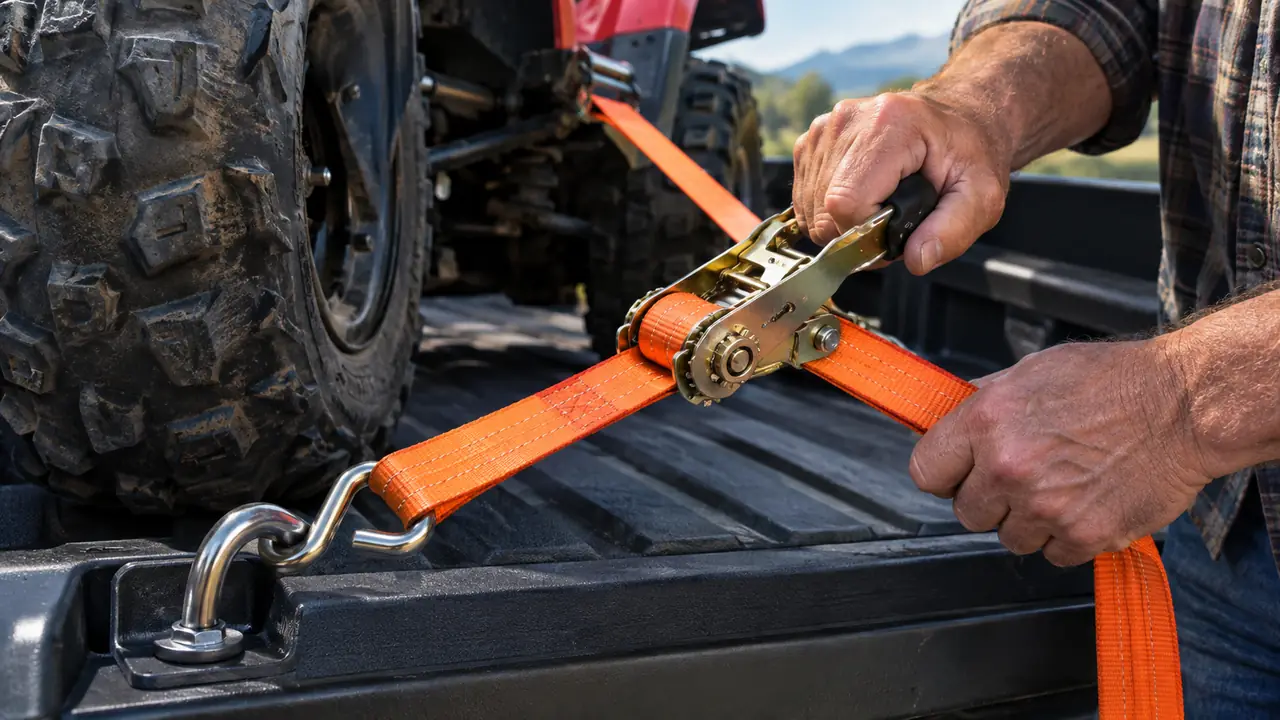
A ratchet pulls the webbing tight and locks it in place. You can get the strap drum-tight with two fingers, and it stays that way for 200 miles. I've driven from Ridgecrest to the dunes with the same tension on all four straps, and none of them loosened. The handle clicks solidly, no slippage. I remember one trip last October when I hit a series of potholes that made the whole truck shake. When I stopped for gas, I checked the straps and they were just as tight as when I left. A bungee would have stretched and let the load shift. The ratchet doesn't.
Coated Hooks That Won't Scratch Your Trailer
The hooks have a vinyl coating, so they don't mar the rails of my trailer or the tie-down points on the Grizzly. I used to wrap rope around the frame and it wore through the paint in a season. With these, the hooks grab the factory loops and the coating keeps everything clean. It's a small detail that saves you a repaint. I've got a friend who used bare metal hooks on his trailer and the rails are rusted where they scratched. These coated hooks have been on my trailer for three years and there isn't a mark. That's the difference between a tool and a problem.
Webbing That Holds Up in the Sun
I leave these in the bed of my truck year-round. The webbing is UV-resistant, and after three years it still doesn't show cracks or fraying. I've had cheap straps turn brittle after one summer in the desert. These are the ones that survived the 115-degree July heat without losing any strength. I checked the webbing last month, running my hand along the full length, and there's no discoloration or rough spots. The stitching on the loops is still tight. That tells me they'll hold for many more seasons. I don't baby them, either. They sit in the sun, get rained on, and get thrown around with the rest of my gear.
They Don't Stretch When It Gets Hot
Nylon bungees lose tension in the heat. Ratchet straps are polyester, so they hold their tension from 30 degrees to 110. On a 105-degree day on the fire road, my load stays put. I've checked the tension after a long climb and it hasn't budged. I remember one August ride where the temp hit 108, and I had a cooler full of drinks strapped down with these. The cooler didn't move an inch. With bungees, the heat would have made them stretch and the cooler would be sliding around by the time I got to the trailhead. Polyester doesn't have that problem.
Quick Release When You're Done
The release lever pops the ratchet open instantly. No fighting with knots or trying to pull a frozen bungee off a hook. It takes me about 30 seconds to undo all four straps after a long ride. That matters when you're tired and just want to get the quad off the trailer. The first time I used them, I was amazed at how quick the release was. You pull the handle, the ratchet opens, and the strap slides free. No twisting, no prying. It's the kind of design that shows someone actually used these before they sold them.
They Work for More Than the ATV
I've used these straps to haul lumber, a cooler, even a spare tire. The 1,650-pound rating handles everything I throw in the truck. That's the kind of tool that earns its space. Last month I strapped down a load of firewood and it didn't shift a quarter inch. I also use them to hold a gas can in place when I'm hauling it to the station. They're not just for the ATV. When you have a set of quality ratchet straps, you find yourself reaching for them for all sorts of jobs. They've become the go-to tie-down in my garage.
A Locking Mechanism That Stays Put
The ratchet has a locking latch that keeps the handle from popping open on rough roads. I've had cheap ratchets unlock themselves and let the load shift. This one stays engaged, even when I hit a series of washboard bumps at 35 miles an hour. I've never had to retighten mid-trip. The latch is a small piece of metal that flips over the handle, and it makes all the difference. Without it, you're relying on friction to keep the ratchet closed. With it, you've got a positive lock that can't vibrate loose. That's the kind of detail I look for in a tool.
They're Easy to Store
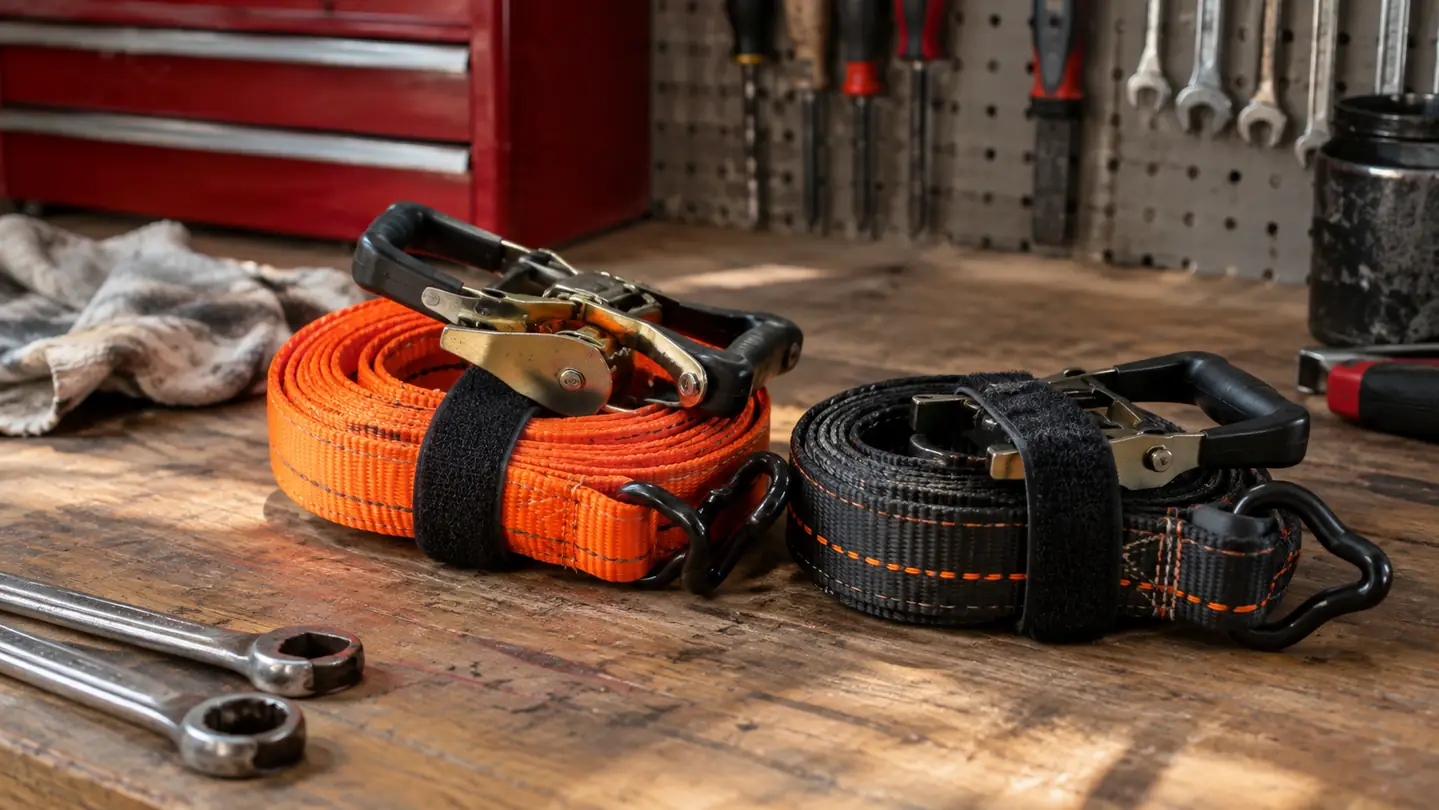
Each strap comes with a Velcro tie that keeps it rolled up. I keep them in a canvas bag under the rear seat. They take up about the space of a rolled-up towel. That means I always have them when I need them, not buried under a toolbox. I used to keep my old bungees in a tangled pile in the corner of the garage, and I'd waste ten minutes untangling them. These straps roll up neatly and stay that way. The Velcro tie is long enough to wrap around the whole coil, so they don't come undone on rough roads. It's a simple system that works.
Four Straps Means Redundancy
I use one strap per wheel on the Grizzly. Even if one strap fails, the other three still hold the machine. That's peace of mind when you're 40 miles from the nearest gas station. I've seen a single strap break and the whole load go sideways, and I don't want that to happen to anyone. Four straps give you redundancy. If one gives out, you still have three holding the load. And because each strap is rated at 1,650 pounds, even a single strap can hold a full-size ATV. The four-pack means you're never relying on one point of failure.
What I'd Skip
If you're only hauling a cooler or a couple of lawn chairs, you don't need a 4-pack of 1,650-pound straps. A pair of smaller cam straps will do. And if you're tying down anything heavier than a full-size ATV, like a side-by-side or a tractor, these aren't rated for that. Know your weight and use the right tool.
The difference between a strap that holds and one that lets go isn't the brand, it's the mechanism. A ratchet locks. A bungee stretches.
Haul Your ATV Like You Mean It
Four FORTEM ratchet straps give you the holding power you need for a 700-pound machine. Check today's price on Amazon.
Amazon Check Today's Price on Amazon →