I have stored a quad for winter the wrong way more times than I care to count. I am Cal Mercer, I live outside Ridgecrest, California, on the edge of the high desert, and I ride a 2019 Yamaha Grizzly 700 4x4 in the washes and on the fire roads most weekends. For years I did the lazy thing. I parked it in the garage, walked away, and prayed. By March I was always paying for it: a dead battery, gas that had turned to varnish, and a carburetor that needed a rebuild. The desert is dry, but it still gets cold at night, and the temperature swings are what hurt a stored machine.
The part that surprised me most was the cover. I used to think a cover was for keeping dust off the seat. It does that, sure, but the ATV Cover with buckle, a 420D heavy duty ripstop cover, does more. It keeps moisture off the electricals, keeps the sun off the plastic, and keeps the pack rats out of the airbox. I will walk you through the whole routine in the order I do it, so your machine starts right up in April. None of this is hard. It just takes one afternoon, and it saves you a weekend in the spring.
A cover is the last step and the one most guys skip
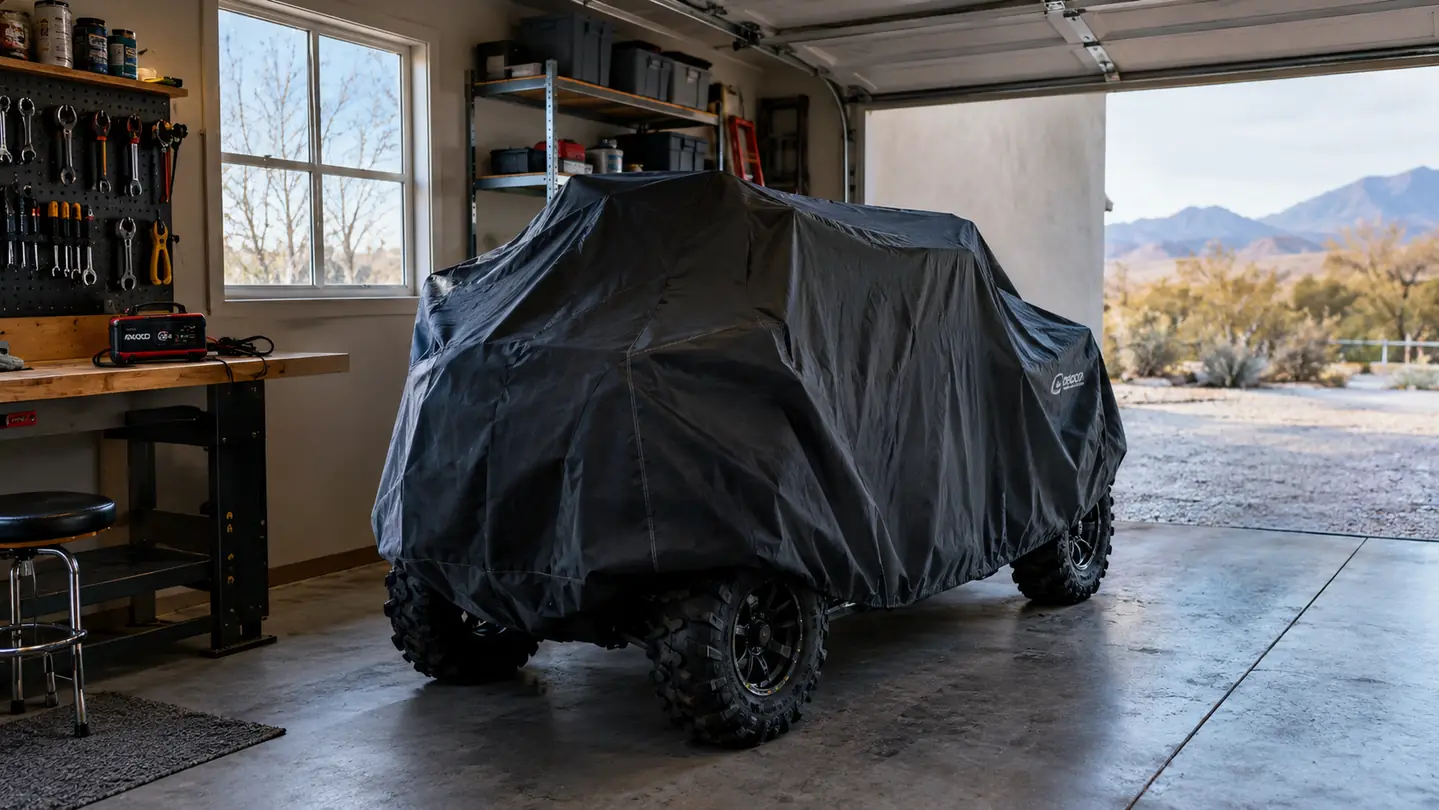
The ATV Cover with buckle is the one I use on my Grizzly. It fits over the racks and the front bumper, straps down tight, and breathes so condensation does not collect underneath. Have it on hand before you park the machine for the season.
Amazon Check Today's Price on Amazon →When to Do This
I do this on the first weekend after Thanksgiving, before the hard frosts hit the desert. The timing matters less than the routine. As long as the machine is clean and dry and the fuel is treated before the weather turns, you are fine. If you wait until January, you are storing a machine that has already been through a month of cold nights with untreated gas and a battery draining. Do it while the weather is still decent and you will not be freezing in the garage.
Step 1: Wash it, then dry it like it matters
Start with a proper wash. I take the Grizzly out to the driveway, hit the frame and the undercarriage with the pressure washer, and get every clump of desert mud off. Mud holds moisture against steel, and moisture is what starts rust on the frame, the skid plate, and the fasteners. Pay attention to the swingarm and the underside of the fenders. Those are the spots where mud packs in and stays wet for weeks after the rest of the machine looks clean.
Then you have to dry it. I take the machine for a short ride around the block, which throws water out of the nooks, or I wipe it down by hand with an old towel. The point is to get water out of the places where it hides: behind the radiator, under the seat, inside the footwells, around the wiring. A cover will trap whatever moisture is left on the machine, so you want it bone dry before anything goes on top of it.
That includes the chain and the cables. Once the machine is dry I spray the chain with a good chain lube, and I give the throttle and brake cables a shot of cable lube. That keeps them from rusting stiff over the months. It takes five minutes and it saves you from replacing a cable in the spring.
Step 2: Stabilize the fuel and fill the tank
Gas goes bad. It starts to break down in about a month, and by spring you are looking at varnish in the carburetor or gummed up injectors. The fix is cheap and takes five minutes. Add a fuel stabilizer to the tank, then fill it all the way to the top. A full tank leaves almost no room for air, and air is what lets moisture condense inside the tank and rust it from the inside out. I have pulled a tank that sat half empty and it was brown inside. You do not want that.
Use the stabilizer at the right dose. I pour it in before I fill up, so it mixes as the pump runs. Then I run the quad for about ten minutes so the treated gas reaches the carburetor, the injectors, and the fuel lines. That way the whole fuel system is protected, not just the tank. Ten minutes of riding is a small price to pay to protect the whole system.
One caution: do not skip this step. I have skipped it twice, and both times I spent a weekend in the spring cleaning carburetors. A bottle of stabilizer is cheap, and it takes an afternoon of your time to undo the damage. The math never works out in your favor.
Step 3: Pull the battery and put it on a tender
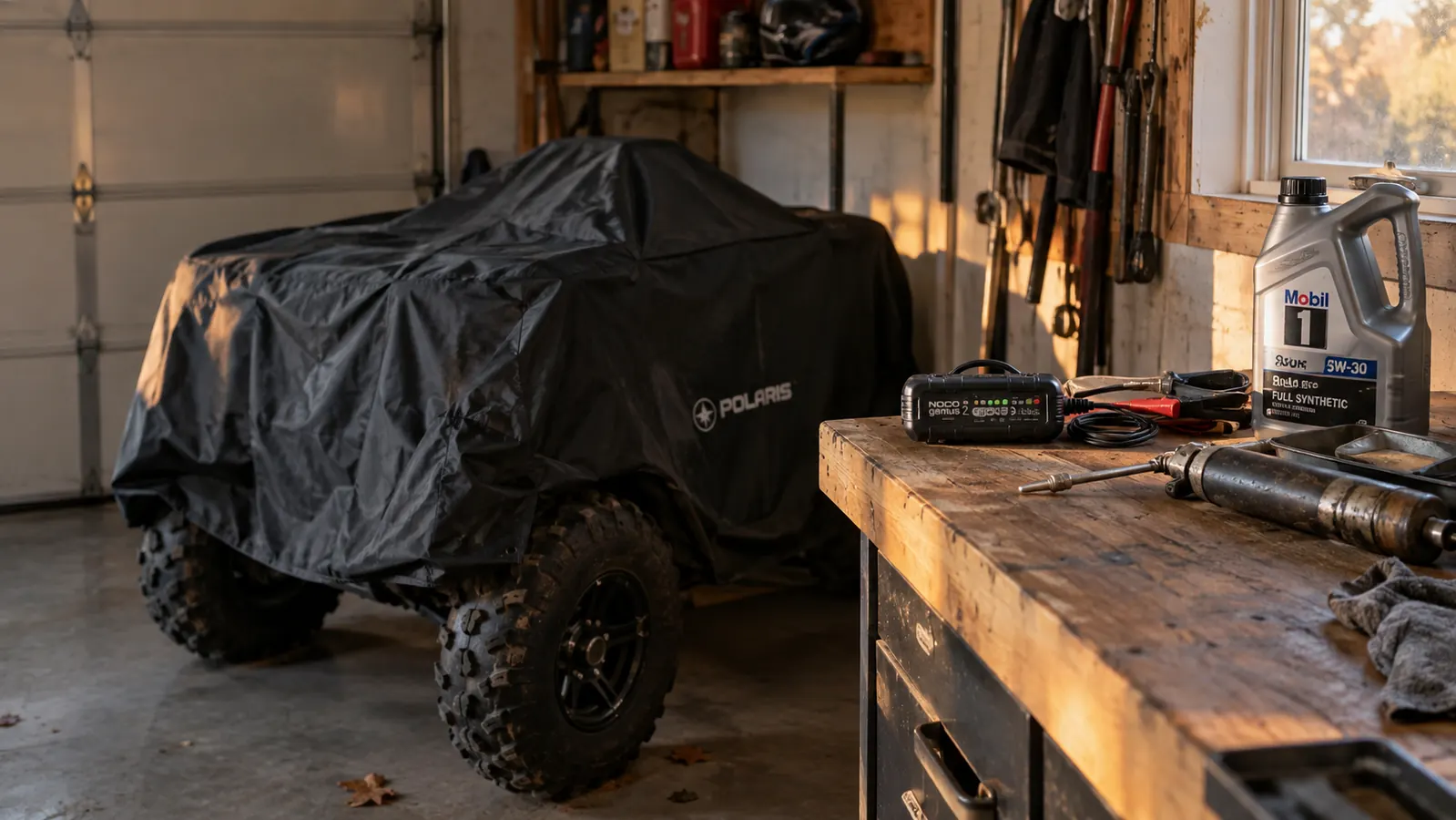
A battery that sits all winter drains itself flat, and a lead acid battery that goes dead in the cold can freeze and crack. The fix is simple. I disconnect the negative terminal first, then the positive, and lift the battery out of the Grizzly. I put it on a battery tender, a smart charger that keeps it topped up without overcharging, and I leave it on the bench in the garage all winter. In the spring it goes back in and the machine fires on the first turn.
If you do not have a tender, at least charge the battery fully before you store it, and check it once a month through the winter. A battery that sits at full charge survives. A battery that sits half dead does not. A tender costs less than a new battery, and it pays for itself the first winter you do not have to buy one.
Do not talk yourself out of this step because the battery is fine right now. I thought the same thing last year and I was jumping the Grizzly off my truck by February. Pull it, put it on the tender, and forget about it until spring. Future you will be grateful.
One note on battery type. If your quad has a lithium battery, treat it a little differently. Store it at about half charge and do not leave it on a standard lead acid tender. The charger has to be rated for lithium. Check your owner's manual. Most utility quads like the Grizzly still ship with lead acid, so the tender I described works fine.
Step 4: Change the oil and grease the fittings
I change the oil before I store the quad, not after. Used oil has acids and combustion contaminants in it, and those sit against the engine all winter. A fresh oil change means the engine sits with clean oil, and it means the filter is clean when you fire it up in the spring. It takes twenty minutes and it is the cheapest insurance you can buy for the engine. I run the engine for a minute before I drain it, so the oil is warm and thin and carries the junk out with it.
While I am under there I hit every grease fitting with a grease gun. The Grizzly has fittings on the front and rear suspension, the steering, and the driveshaft. Grease them all until fresh grease pushes out of the joint. That pushes the old, contaminated grease out and leaves clean grease protecting the joint over the winter. It takes ten minutes and it keeps the bushings and joints from drying out.
Check the coolant level and the air filter while you are at it. The desert eats air filters. If the filter is dirty, clean it or replace it now, so you do not have to do it on the first ride of spring. The same goes for the coolant. Top it off if it is low. These are five minute checks that save you a headache later.
Step 5: Park it, cover it, and keep the critters out
Where you park matters as much as what you put on the machine. I park the Grizzly in the garage, off the concrete floor on a couple of pieces of old plywood so the tires are not sitting directly on cold concrete. Some guys put the machine up on jack stands to take the weight off the tires. I do not bother with that. I just make sure the tires are at full pressure so they do not flat spot over the winter, and I roll the machine forward a few feet every couple of weeks.
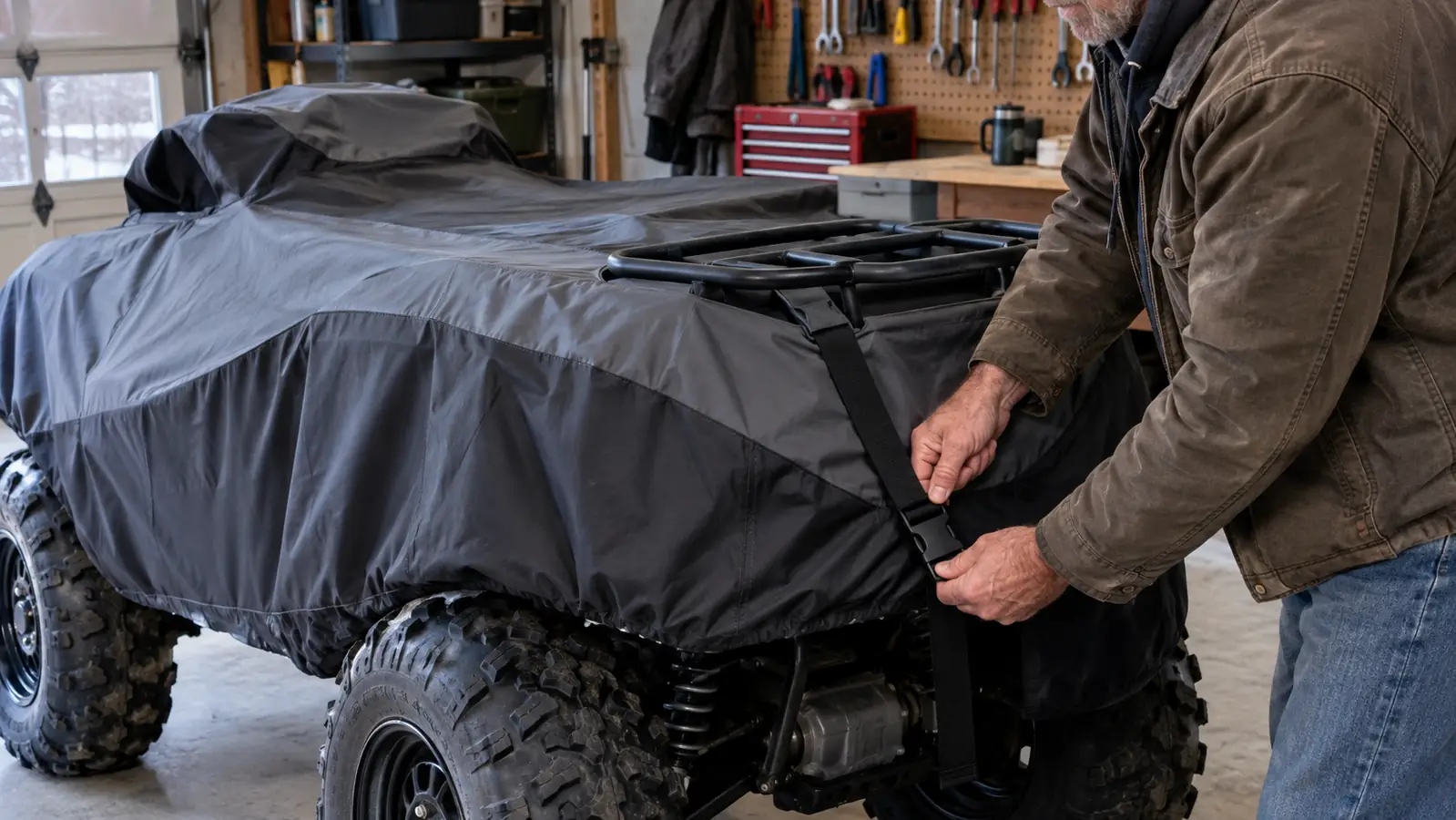
Then I put the cover on. This is where the ATV Cover with buckle earns its keep. It is 420D ripstop, which is heavy enough to shrug off a winter of dust and the occasional drip from the garage roof, and it has buckles that pull it tight over the machine. A loose cover flaps in the wind and rubs paint. A tight cover stays put. I put it on over the racks and the front bumper, cinch the buckles, and it does not move for three months.
Pack rats are the enemy in the high desert. They love a warm airbox and a nest of soft filter foam. The cover keeps them out of the machine entirely, which is worth the price of it on its own. I also toss a couple of mothball cakes under the seat, the old trick, and I stuff steel wool in the exhaust pipe and the air intake. That keeps anything from moving in over the winter. It sounds like overkill until you pull a rat nest out of an airbox.
The Short Version
If you only remember five things, remember these. Wash it and dry it. Fill the tank with treated gas and run it. Pull the battery and put it on a tender. Change the oil and grease the fittings. Park it under a tight cover with the vents blocked. That is the whole routine. I have done it every fall for the last three years, and every spring my Grizzly has fired up on the first or second turn. It used to be a coin flip. Now it is a sure thing.
What Else Helps
If you want to go one step further, pull the spark plugs and squirt a little fogging oil into each cylinder, then turn the engine over by hand once or twice. That coats the cylinder walls and keeps them from rusting. It is an extra twenty minutes and it matters most if you live somewhere humid. Here in the desert I skip it most years, but I will do it if I know the quad is going to sit for more than four or five months.
If you have the room, put the machine up on jack stands so the tires do not develop a flat spot. I do not have the room in my two-bay garage, so I keep the pressure up and roll the machine a few feet every couple of weeks. And check on it once a month. Open the garage, lift the cover, look for droppings, look for moisture, and make sure nothing has chewed a wire. Ten minutes a month beats a surprise in the spring.
And one more thing. Leave the fuel petcock closed if your machine has one, and crack the drain screw on the carburetor bowl to empty it. A dry float bowl cannot varnish. I do this on the Grizzly and it makes the first start of spring almost instant.
A full tank of treated gas, a battery on a tender, and a tight cover. That is the whole trick, and it costs one afternoon.
Get the cover on before the first hard frost
The ATV Cover with buckle is the one I trust on my Grizzly. It fits over the racks, straps down tight, and breathes, and it keeps the dust and the pack rats off all winter. Check today's price on Amazon and have it ready before you park the machine.
Amazon Check Today's Price on Amazon →