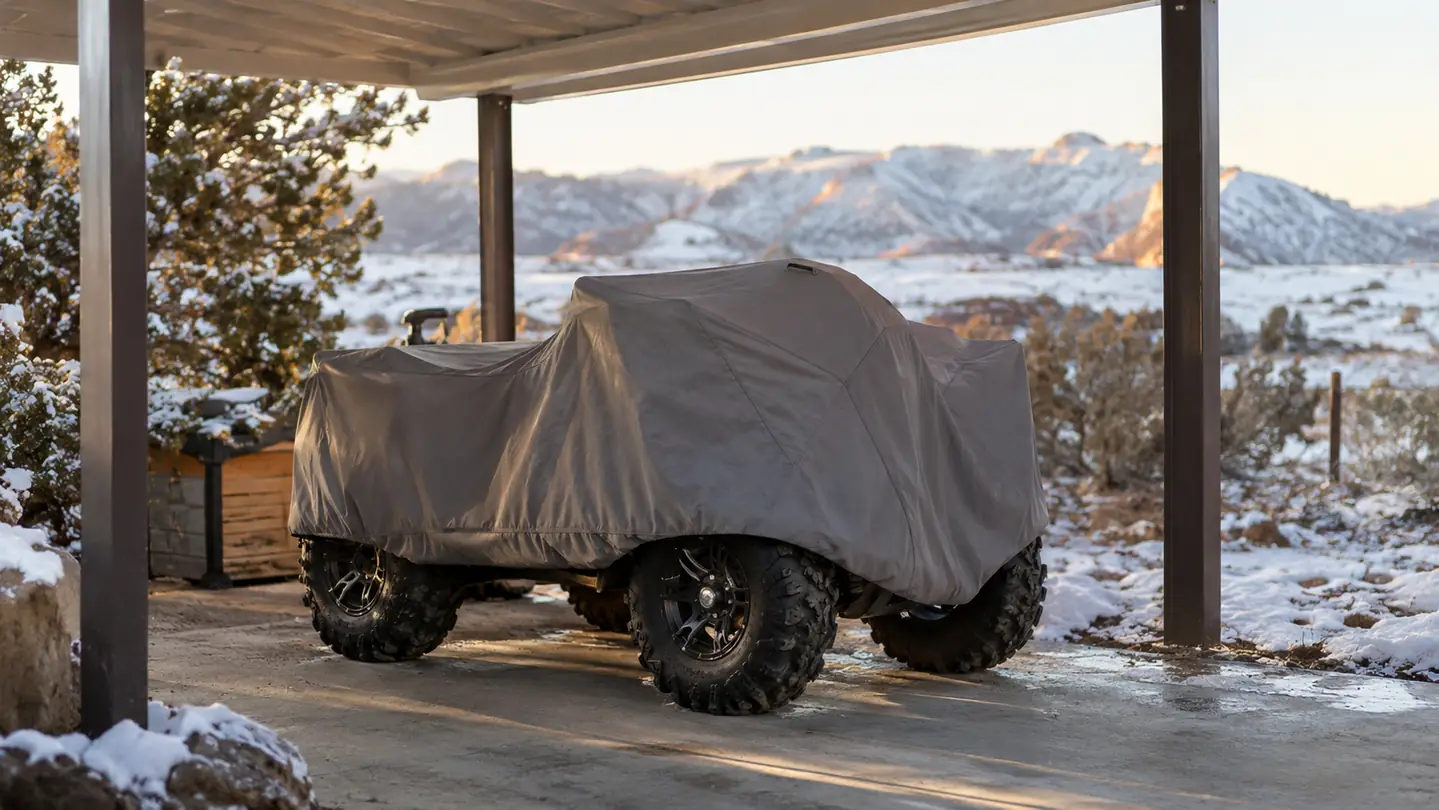
I have a 2019 Yamaha Grizzly 700 that lives outside year round. It sits under a west-facing carport, which means it catches morning shade and then the full force of the afternoon sun, and in the winter it catches whatever the high desert throws at it. Last fall I decided to stop letting it bake and take the weather head on. I bought this ATV Cover, the 420D heavy duty ripstop one with the buckle system, in early November. It went on the day before the first real storm of the season and it stayed on until March. Not the kind of cover you toss on for a weekend and pull off Monday. I mean it lived on the machine for five straight months, through snow, wind, rain, and the kind of UV that cracks a seat in two seasons.
The whole point of this test was to answer one question: does a cover in this class actually protect a quad you leave outdoors, or does it just keep the birds off? I have been burned before. I bought a cheap tarp-style cover a few years back and it shredded at the corners by January and held moisture against the seat, which did more harm than leaving it bare. So I was skeptical when this one showed up. It felt heavier than the cheap one in the box, but I had heard that before too. What I did not expect was how it would hold up through a genuine Ridgecrest winter, including the one storm where we got eight inches of wet snow in a single night.
The Quick Verdict
After five months outdoors through snow, rain, and high-desert sun, this 420D cover kept the Grizzly clean, dry, and free of new UV damage. It is not the last cover you will ever buy, but it is the first one that survived a full winter without a tear that ran.
Amazon Check Today's Price →Five months outdoors and it never tore, never blew off, and never held water against the seat.
If your quad lives outside, this is the cover I would put on it before the next storm. It handled a full Ridgecrest winter without a single rip.
Amazon Check Today's Price on Amazon →How I've Used It
My setup is not complicated. The Grizzly parks under the carport with its front end toward the house, and it gets ridden most weekends, sometimes out in the washes, sometimes just up the fire road behind my place. On a normal week it sits for five or six days between rides. That is the exact scenario that kills an uncovered quad: dust settling into every seam, the seat baking in the afternoon sun, moisture beading on the exhaust and the racks. I have owned the machine for three years now, and the two uncovered winters before this one already faded the top of the seat and left a chalky film on the dash.
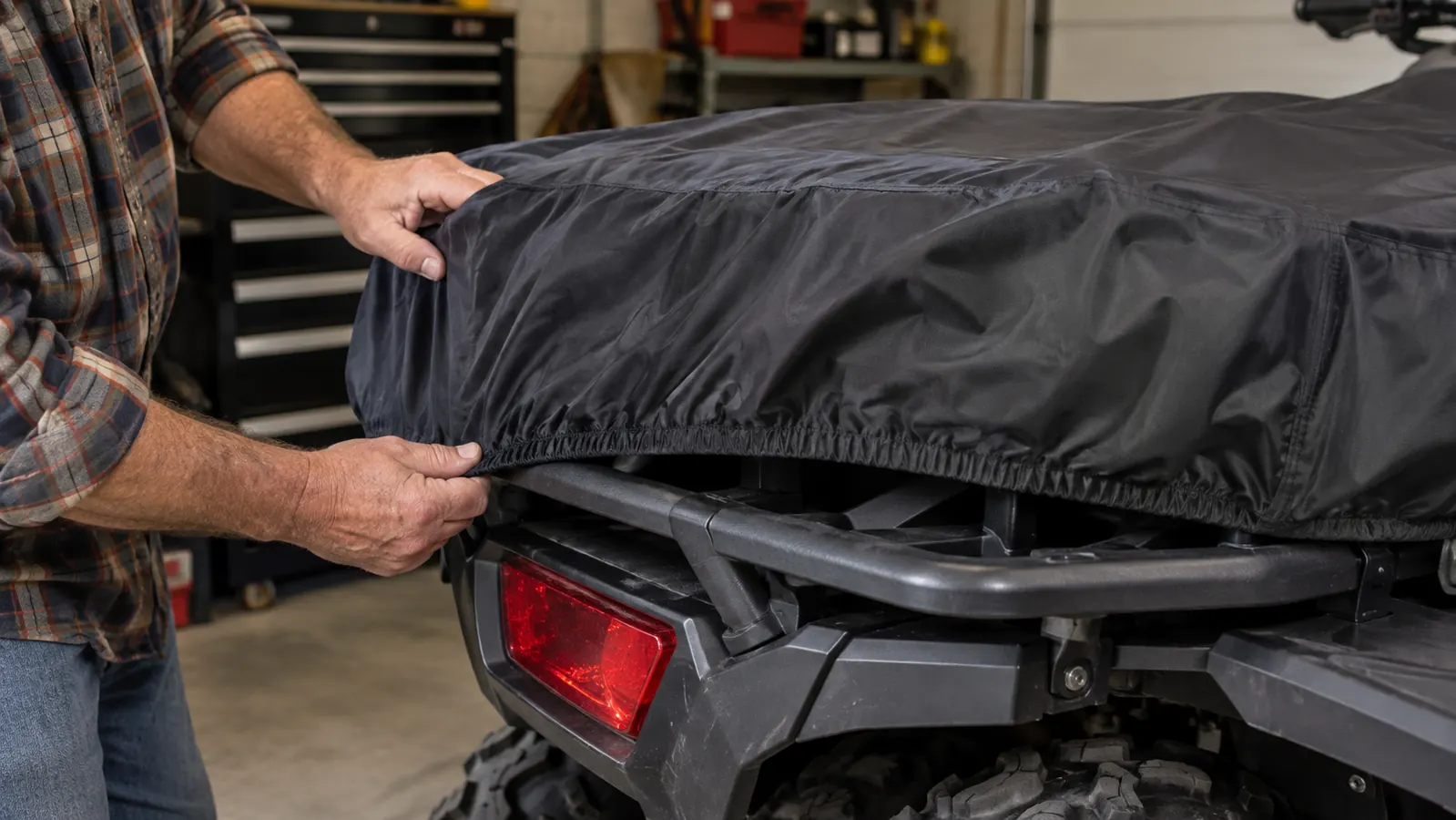
I put the cover on the same way every time. It takes about two minutes. I drape it over the handlebars first, then pull the elastic hem down over the rear rack, then work the front around the bumper and the winch line. The buckles underneath go under the frame, one on each side, and I cinch them snug. The first week I did not buckle it at all, just draped it, and a gust of wind flipped the rear corner up and left the seat half exposed. After that I used the straps every single time, and in five months it never blew off once, even in the two nights we had gusts over forty miles an hour. I keep the cover folded in a plastic bin by the carport post so it is always within reach, and the routine is the same every week: cover off Saturday morning, ride, wipe the dust off Sunday evening, cover back on.
What the 420D Fabric Actually Feels Like
The first thing you notice is the weight. This is not the crinkly silver emergency blanket fabric that cheap covers are made from. The 420D ripstop has a real hand to it, like a medium tent fly or a decent truck tonneau. It is thick enough that you cannot see light through it when you hold it up, and the ripstop grid is visible if you look close. That grid is what stops a small tear from turning into a long split. I have had two snags on it, one from a branch that poked out of a pile I backed into and one from the edge of the rear rack where a bolt sticks up a quarter inch. Both stayed as small punctures. Neither ran. I even did a deliberate test with the corner of a screwdriver, pressing the tip against the fabric from underneath, and the point did not poke through cleanly. The grid stopped it. That is the difference between this and a cheap cover right there.
The seams are the part that usually goes first on cheap covers, and I checked these every couple of weeks. ATV Cover double stitched them with a folded hem, and after five months of wind whipping the fabric back and forth I cannot find a single loose stitch. The elastic around the bottom edge is still springy, which surprises me. On the cheap tarp cover that elastic was the first thing to go, and once it went the whole thing sagged and flapped. This one still snaps back tight against the frame. The fabric also sheds water rather than absorbing it. After a rain you can run a hand across the top and the surface is beaded, not soaked.
Fit and the Buckle System
Fit is where covers usually fail, because every quad is a slightly different shape. Mine has a tall handlebar, a rear rack with a toolbox bolted on, and a front bumper with a winch. A generic cover that is just a rectangle of fabric with a drawstring will sit wrong on that shape and flap in the wind. This one is cut like a fitted shell. The front drops down over the bumper and the winch line, the middle clears the handlebars without putting tension on the grips, and the rear covers the rack all the way down to the taillight. Laid flat it measures roughly 92 by 44 inches, and on my machine it clears the handlebar tips by about four inches. I checked the coverage at the start and the end of the winter and the hem sat within an inch of the same spot both times. It did not stretch out and settle lower over the season.
The buckle system is simple and it works. Two nylon straps hang under the hem, one at the front and one at the back, each with a plastic buckle. You reach under, pull the strap across the frame, and clip it. That is the whole thing. It is not fancy, but it does the one job that matters, which is keeping the cover on the machine. On the cheap cover I rigged bungee cords to the frame and they still worked loose in the wind. These buckles never once came undone. The only real complaint I have is that the straps are a little short for a quad with a wide belly pan, and on mine I have to thread them under the skid plate rather than over it. That adds about thirty seconds to the routine.
One Winter of Snow, Rain, and Sun
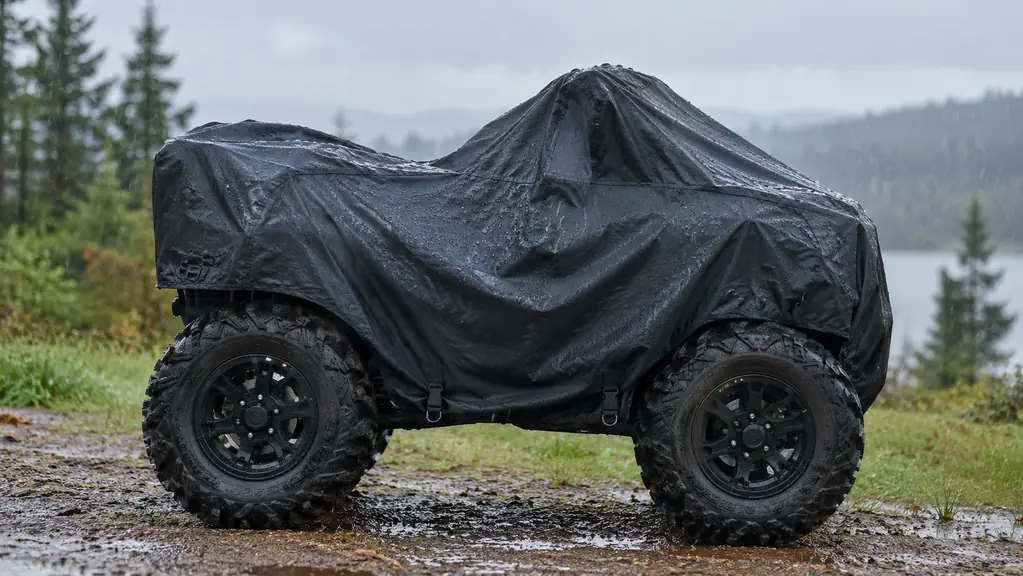
The storm that sold me was the one in early January. We had a front come through that dropped eight inches of wet snow overnight, the heavy kind that sticks to everything. The next morning the cover was bowed down in the middle under the weight of it, and I figured that was the end of it, that the weight would pull the seams apart or the fabric would sag onto the seat and hold meltwater against it. I went out and brushed the snow off with a broom, and underneath the machine was dry. The seat, the grips, the tool box, all dry. The fabric had shed the water without letting it soak through, which is exactly what the ATV Cover is built to do, and the snow had not been heavy enough to collapse the shape, which is held up by the handlebars and the racks underneath.
Rain was a different test. The high desert does not get much rain, but we had a stretch of three days of steady drizzle in February, the kind of thing that soaks through a tarp in an afternoon. The 420D fabric is not fully waterproof the way a rubber tarp is, it is water resistant, and that distinction matters. After three days of drizzle I pulled the cover off and found a little dampness on the seat, not standing water, just the cold feel of moisture. It was nowhere near the puddle the old tarp left. I am not going to pretend it is a dry-bag seal. If you park a wet quad and cover it, the moisture is going to be trapped under there either way, so I always let the machine dry for an hour before covering it.
The sun is the sneaky one. In Ridgecrest the summer UV is brutal, and even a mild winter day here has enough sun to fade plastic. The cover sat through clear days where the afternoon sun hit it directly for five hours at a stretch. I checked the plastic underneath in March when I finally took the cover off for good. The fenders, the seat, the grips, no fading, no cracking, no chalky white film. The old uncovered winters had already faded the top of the seat and the dash, and I can tell the cover stopped any further damage this winter.
What Annoyed Me
I want to be straight about the things that bugged me, because a review that pretends a cover is perfect is not a review you can trust. First, the straps are short, which I mentioned. Second, the cover is not quick to put on. Two minutes is fine for me because the machine sits in a carport, but if you ride daily and you want something you can fling on in ten seconds, this is not it. The fitted cut means you have to line it up right or the hem rides up on one side. Third, it is bulky when it is off. Folded, it is about the size of a rolled truck tonneau, a cylinder maybe eighteen inches around. It does not stuff down to the size of a water bottle. It takes up a full hook in my shop, and if you have a small garage you will feel that.
And the dampness I mentioned. After that three-day drizzle there was a little moisture on the seat. It was not enough to do any damage, but if you live somewhere that gets weeks of continuous rain rather than the occasional storm, you would want to check under the cover now and then and air the machine out. No cover is a substitute for a dry garage, and anyone who tells you otherwise is selling something. This one is the best outdoor option I have found for the money, but it is still an outdoor option.
What I Liked
- 420D ripstop fabric survived five months outside with no tear that ran
- Water resistant enough to shed a full winter of snow and rain
- Fitted cut stays put with the buckle straps, never blew off in 40 mph gusts
- Kept the seat, grips, and plastic from new UV fading through the winter
- Double stitched seams and elastic hem still in good shape after five months
Where It Falls Short
- Buckle straps are a little short for a wide belly pan
- Takes about two minutes to put on properly, not a ten second fling
- Bulky to store when the cover is off
- Water resistant, not fully waterproof; a little dampness after days of steady rain
Eight inches of wet snow sat on top of it overnight, and underneath the machine was dry. That is the whole review in one sentence.
Who This Is For
This cover is for the rider who parks outdoors and wants the machine to be there, dry and clean, when the weekend comes. If you ride most weekends, leave the quad under a carport or a tree or in the open, and you are tired of wiping dust off the seat and finding faded plastic and bird droppings, this is the cover. It earns its keep over a single winter. The fact that the fabric and the stitching held up for five months tells me it will go several seasons, and for the money the cost per winter is tiny. It is also for the guy who has been burned by a cheap tarp cover before and wants something that actually fits and stays on.
Who Should Skip It
If your quad lives in a garage or a shed, you do not need this. A cover is solving a problem you do not have. If you ride every single day and you want something you can throw on and off in ten seconds without thinking, the fitted fit and the straps will annoy you. And if you are in a climate with weeks of continuous rain, be honest with yourself: this is water resistant, not a dry bag, and you would be better off with a real shelter or a heavier cover built for that kind of weather. This one is the right tool for the desert and the occasional storm, not for a monsoon.
Before your next storm, give your quad the same five months of protection I got.
This 420D cover held up through snow, rain, and high desert sun without a single tear that ran. If your machine lives outdoors, it is the cheapest insurance you will buy this year.
Amazon Check Today's Price on Amazon →