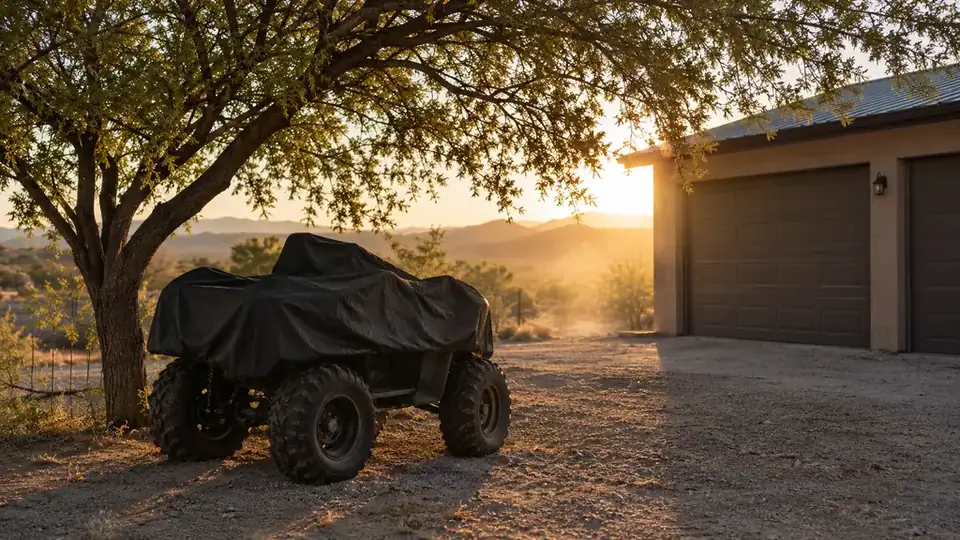
This cover has been on my 2019 Grizzly 700 for the better part of a year now, parked under a mesquite tree beside the garage where the wind comes down off the ridgeline every afternoon. I bought it because the previous cover I owned, a cheap one from a farm store, tore along the seams the first season and left the seat full of dust anyway. This one is a 420D ripstop with an elastic hem and buckles at the bottom. I've had it through a summer of 110 degree days, a couple of windstorms, and one long rain. Here's what nobody tells you about it.
I'll start with the ATV Cover brand name on the box, because that tells you nothing and people ask me about it anyway. It's a plain label, but the material is better than plain. The ripstop weave is tight, the seams are double-needle, and the hem has a real draw cord inside it, not just a folded edge. I've seen covers with shinier names and worse stitching. This ATV Cover holds up. But it also has flaws, and I'd rather tell you about those first.
A cover is a simple thing, so the reviews all sound the same: fits well, keeps the dust off, good value. What they don't tell you is how the cover behaves at 5 a.m. when you're half awake trying to get it on before the wind picks up, or what happens after a season of the sun hammering the same fold of fabric, or where the water actually goes when it rains. I kept notes on all of that. Here's the honest version.
The Quick Verdict
A solid, well-stitched cover that fits a mid-size quad properly and stays put in wind. The plastic buckles are the weak point, and water collects in the seat valley if you don't pitch the cover. Honest value for what it does, not perfect.
Amazon Check Today's Price →The cover I kept on the Grizzly all year
If you want a fitted cover that survives a high desert summer and a winter of wind without tearing at the seams, this is the one I'd buy again. I'll walk you through exactly what held up, what annoyed me, and what I'd change.
Amazon Check Today's Price on Amazon →How I've Used It
I'm a retired fabricator, which means I look at seams the way most people look at a tire's tread. I spent thirty years welding and fitting parts, so a double-stitched seam with a proper hem reads different to me than a single pass of thread. This cover has both, and it shows.
The Grizzly sits outside about six days a week. I ride on weekends, desert washes and fire roads mostly, and the cover goes on when the machine is parked. That means it gets taken off and put back on at least twice a week, usually in a hurry, usually with the wind blowing. That kind of use is harder on a cover than leaving it on all winter. After a year of that, here's where things stand.
The cover fits the machine like it was measured for it. I'll get to the details of fit below, but the short version is that it goes on in under a minute and doesn't fight you when you're pulling it over the bars and the rack.
I also leave it on during the week, which is the real test. A cover that only goes on at the campsite is easy. One that has to survive being parked beside the garage in the sun, with packrats and birds and the occasional gust of sand, has to do more. That's the use mine has seen, and that's the honest basis for what I'm about to tell you.
Seam Quality and Stitching
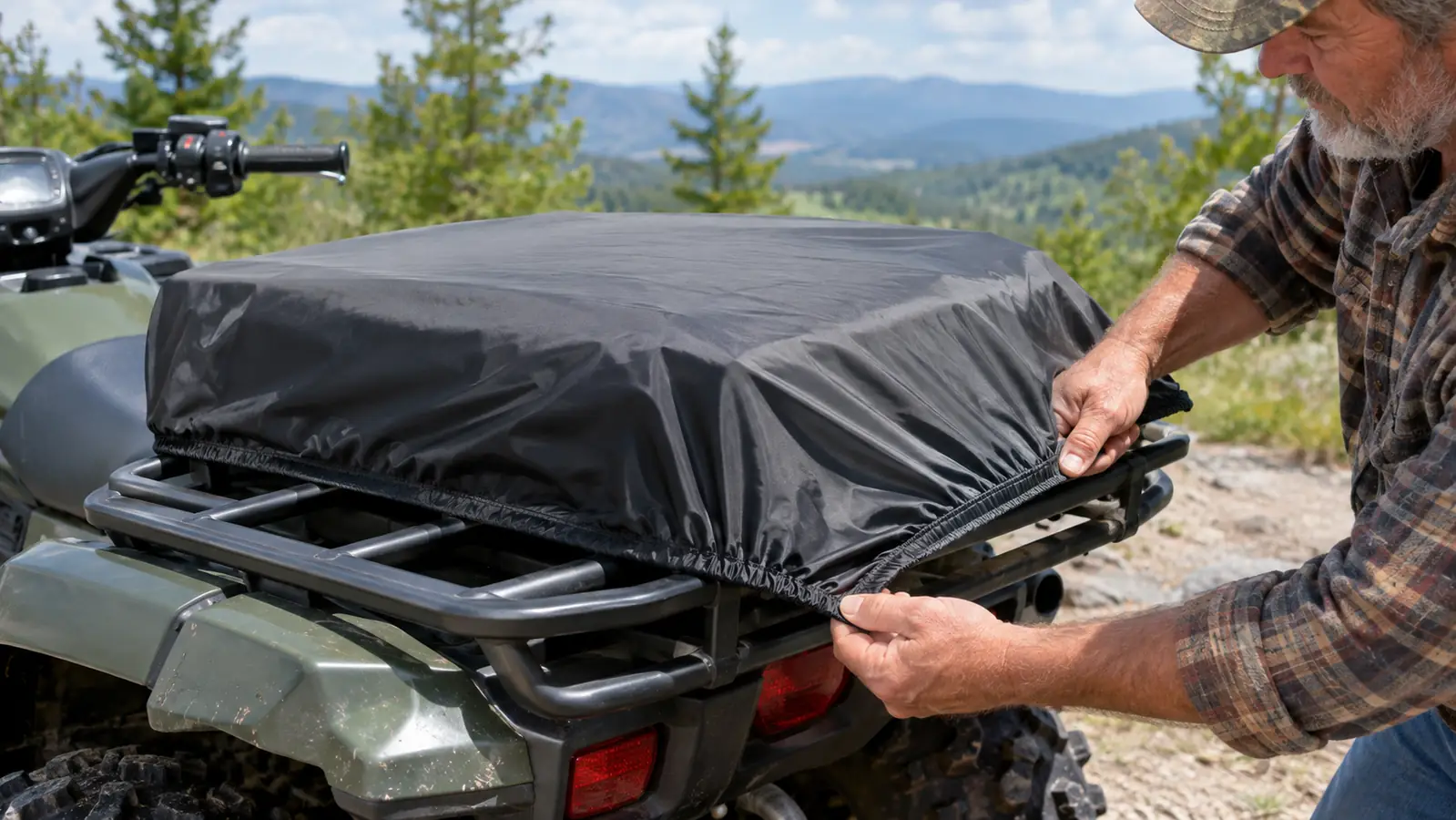
The seams are the reason I kept this cover. The main panels are joined with a double needle, and the hem is a folded edge with a cord sewn into it. On cheap covers the thread is usually a single pass that unravels the first time the wind grabs the fabric. This one has held every seam through a year of pulling, stretching, and the occasional gust that lifts the whole side of the cover.
I checked the stitching after the first windstorm and again at the six month mark. No pulled threads, no separating panels, no place where the fabric was starting to tear at the stitch line. That's the difference between a cover that lasts a season and one that lasts several years.
The ripstop weave is a tight 420D. You can see the reinforcing grid in the fabric if you hold it up to the light. It's not the thickest material on the market, but for a cover that has to drape and fold, thick isn't always better. Stiff fabric is harder to put on and more likely to crack in the cold. This one is the right balance.
One thing I checked closely was the corners where the panels meet at the rear rack. That's a high-stress point on any cover, where the fabric has to turn a sharp corner and the thread takes the strain. On this one, the corners are reinforced with an extra line of stitching that runs the length of the seam. That detail tells me someone who actually makes covers thought about where they fail.
Fit and the Elastic Hem
Fit is where this cover earns its keep. The elastic hem pulls the bottom edge snug against the machine, and the buckles cinch it down further. Once it's buckled, the cover doesn't balloon in the wind the way a tarp does. I've had it on the Grizzly through gusts that would lift a loose tarp right off the machine.
The elastic is the part I was most worried about. Elastic is the first thing to go on any cover. After a year of stretching it over the bars and the rack twice a week, it's still got tension. It's not as tight as the day it came out of the box, but it's holding the hem against the body panels where it should.
The buckles are the weak point, and I'll be straight about that. They're plastic, and they're fine for now, but plastic buckles on a desert machine take a beating from the sun. I've seen covers where the buckles got brittle and snapped after two or three years. I expect to replace these at some point. That's a small job with a needle and thread, so it doesn't change my recommendation.
The fit also matters because a cover that's too big turns into a sail. I've used covers that were sold as universal fit, and they were all a compromise. The fabric hung loose over the racks and caught the wind in places that were impossible to cinch down. This one, sized for the machine, has none of those loose pockets. It hugs the bodywork the way a fitted sheet hugs a mattress, and that's the whole reason it doesn't turn into a flag in a storm.
Wind Buffeting on Fire Roads
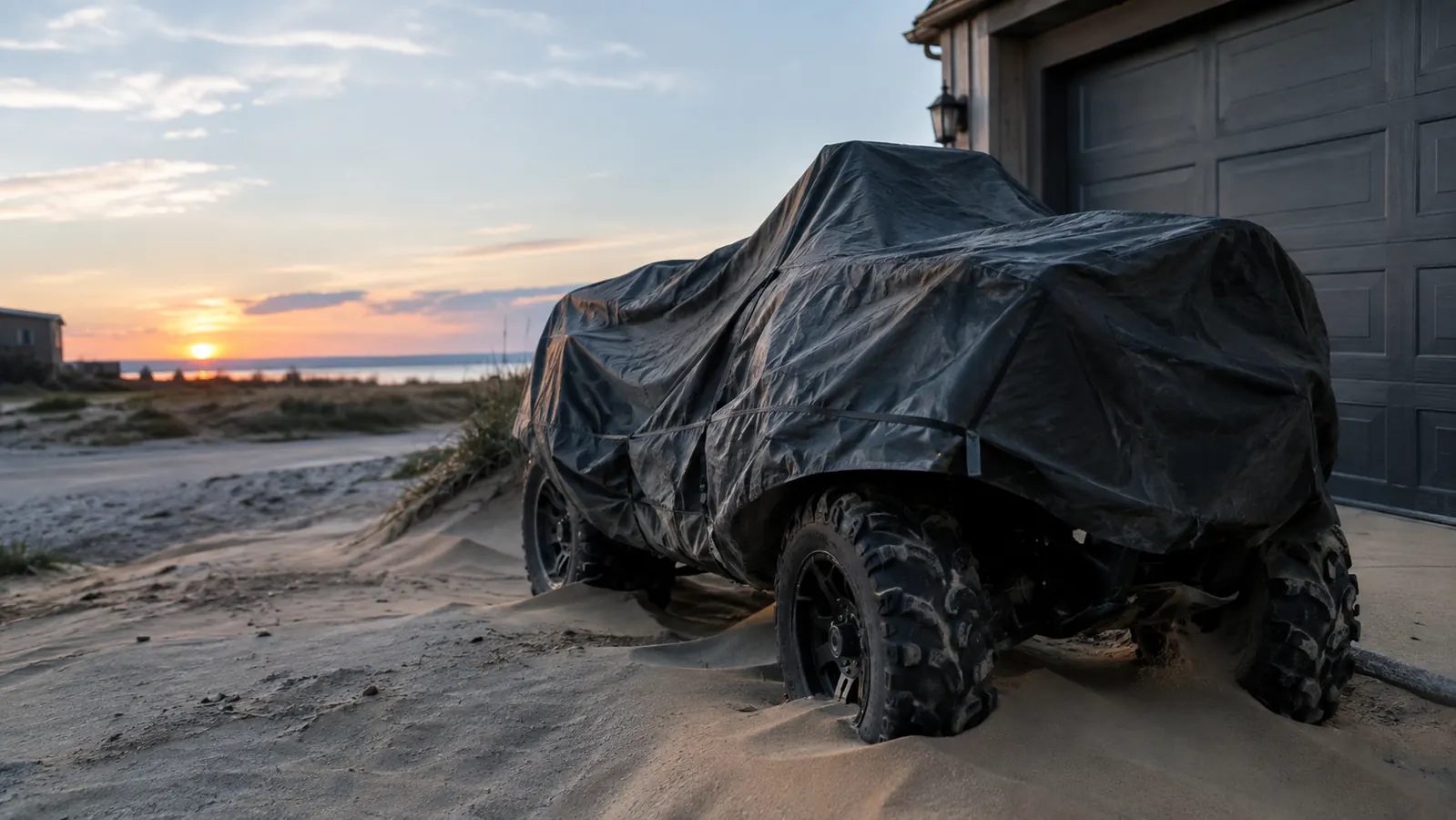
Here's the part the product photos don't show you. Wind buffeting is about how the cover behaves when the wind gets under it. A loose cover slaps the paint, works its way loose, and eventually tears. This cover, with the hem snug and the buckles done up, stays put. I've left it on through two windstorms that threw sand sideways across the yard.
There's a trick to it, and nobody tells you this. The cover will still catch wind on the flanks if you leave it loose. You have to take the minute to pull the elastic hem down all the way around and cinch the buckles so the fabric is taut. Do that, and the cover holds. Skip it, and no cover on earth is going to stay put.
The one thing that still flaps is the corner over the front rack, near the handlebars. There's a fold of fabric there that catches the wind no matter how I adjust it. It's not enough to lift the cover, just enough to notice when the wind is really blowing. If you park facing the prevailing wind, it's barely an issue.
I tested it once on purpose, in a spot where the fire road opens onto a flat that gets the full blast of the afternoon wind. I parked facing the wind, put the cover on without cinching the buckles, and walked back to the truck. Within a few minutes the fabric was slapping against the rack. Then I went back, did up the buckles, and pulled the hem taut. It stopped. That test told me everything: the cover does its job if you do yours.
The Waterproof Claim, Honestly
The box says waterproof, and I'll tell you what I found. In a steady rain, the top surface sheds water fine. I had one long rain, an overnight soaker, and the seat stayed dry. But water collects in the valley where the seat meets the tank if the cover is pitched wrong. The fabric is waterproof, but a cover is a shape, and shapes collect water.
The fix is simple and I do it without thinking now. Park the machine so the nose is slightly downhill, or put a block under the front wheel, and the water runs off the back corner instead of pooling on the seat. If you park on flat ground with no pitch, expect a puddle on the seat after a heavy rain.
In the high desert we don't get much rain, so this is a minor thing for me. If you live somewhere that gets real rain, plan to pitch the cover or you'll be squeezing water off the seat before you ride.
For the dust, which is the real enemy in the desert, the cover is excellent. After a week parked beside the garage, I can pull the cover off and the seat and handlebars are clean. The fabric seals against the bodywork well enough that the fine dust that gets into everything else stays off the machine. That alone was worth it to me, long before the rain question came up.
What Hasn't Held Up
I'm not going to pretend everything is perfect. The plastic buckles are the first thing I expect to replace. The fabric has faded a little on the top surface after a summer of direct sun, which is cosmetic and doesn't affect how it sheds water or blocks dust. And the draw cord at the hem is a little stiff in cold weather, which makes the last pull a bit harder than I'd like.
None of these are deal breakers. They're the honest wear you'd expect from any cover that lives outside. The important parts, the seams and the ripstop fabric, are in good shape after a year. That's the measure that matters.
There's also the way the cover holds a fold. When you pull it off in the morning and stuff it in the back of the truck, it keeps the creases from sitting on the machine. Those creases are where the fabric will eventually show wear, and after a year they're starting to look soft in two places, at the fold over the handlebars and at the back corner. Nothing is torn, nothing is thin yet, but I can see where the first failure would happen if I let it go another couple of years.
What I Liked
- Double-needle seams that have held a full year of wind and sun
- Elastic hem and buckles keep it snug, no ballooning in gusts
- Fits a mid-size quad like it was measured for it, on in under a minute
- Sheds rain on the top surfaces and blocks dust completely
- Draw cord hem stays put against the bodywork
Where It Falls Short
- Plastic buckles are the likely first failure, expect to replace them
- Water pools on the seat if the machine isn't pitched nose-down
- Top surface fades after a summer of direct sun
- Draw cord stiffens in cold weather
- Creases at the handlebars are starting to show soft wear
The measure that matters isn't how a cover looks on day one. It's whether the seams are still holding after a year of wind, sun, and being yanked on twice a week.
Who This Is For
If you have one machine, it lives outside, and you're tired of re-tarping it or finding dust in the seat, this cover is for you. It fits properly, goes on fast, and holds up to real use. The honest wear I found is minor and mostly replaceable. For a rider who wants the machine covered and forgettable until the next ride, this is the one.
If you ride a lot and you hate finding the seat full of dust and the grips cracked from the sun, this ATV Cover earns its place. It's the kind of accessory that's easy to skip and hard to go back to once you have it. I'd rather spend a minute putting the cover on than an hour cleaning the machine on Saturday morning, and that trade is the whole review in one sentence.
Who Should Skip It
If your quad lives in a garage or a shed and only sees weather on the trailer, you don't need this. Any cheap cover will keep dust off a machine that's already sheltered. And if you're the kind of rider who throws a tarp over the machine and never wants to mess with buckles and a draw cord, the fit that makes this cover work will just be an annoyance. Buy the tarp and the bungee cords and move on.
And if you don't mind a little dust and a quick rinse before you ride, save your money. A cover is a convenience, not a necessity. The machine runs fine either way. Buy this because you want a clean seat and paint that lasts, not because anyone needs it.
Ready to stop re-tying a tarp?
After a year on my Grizzly, this is the cover I'd buy again, seams, buckles and all. If your machine sits outside and you want it dry and dust-free without a second thought, check the current price on Amazon.
Amazon Check Today's Price on Amazon →