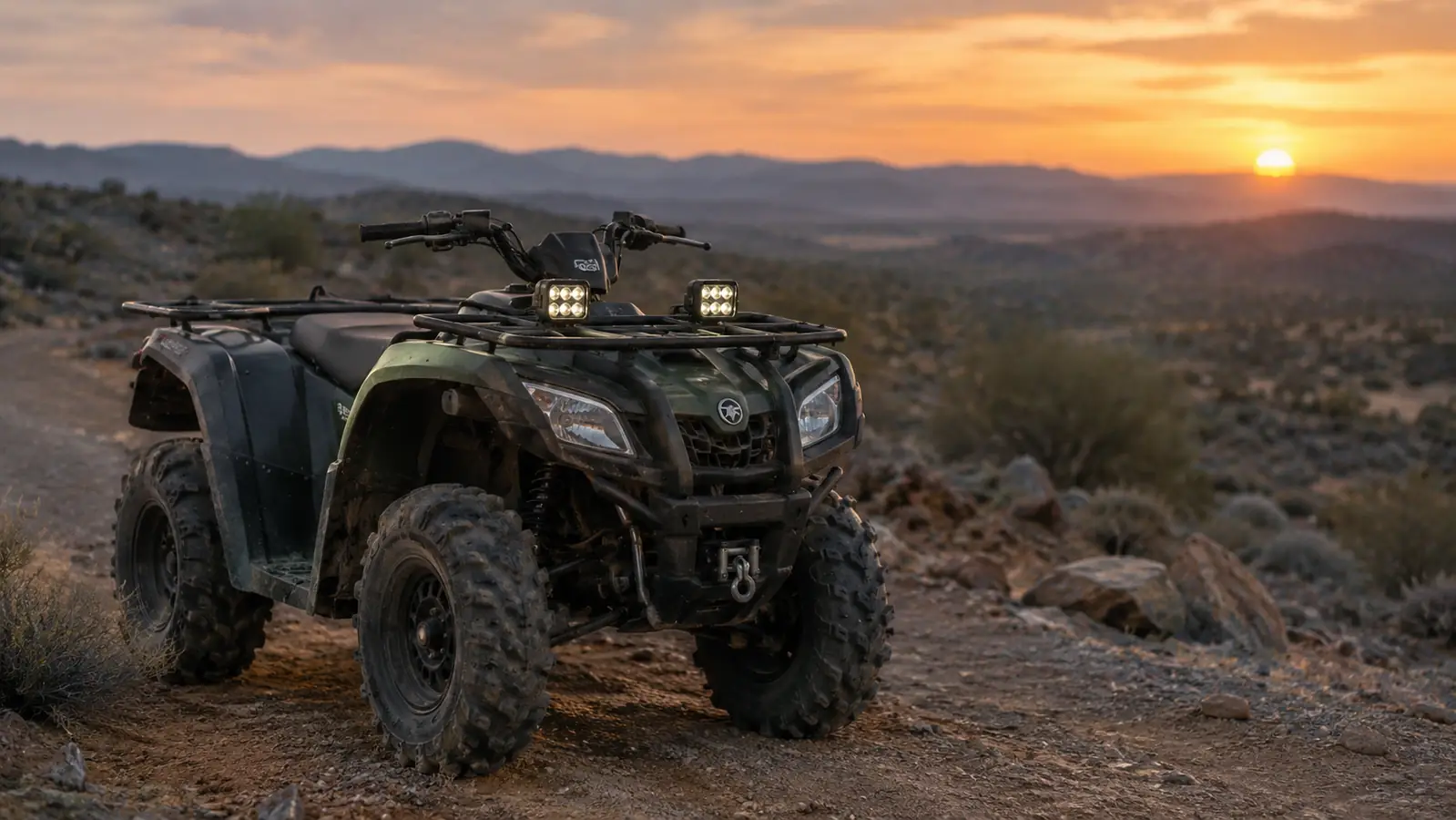
Rigid Industries is the name everyone brings up when you talk off-road lighting. I get it. They have been building lights for racers and overlanders for a long time, and their reputation is earned. But when I bolted a set of Nilight pods to my 2019 Grizzly 700 last October, I wanted to know if the budget option could hold its own against the premium brand. So I ran both. I spent a season with the Nilight pods, and I borrowed a friend's Rigid 10-inch light bar for a weekend to compare them head to head on the same trails.
Here is the short version: if you ride mostly fire roads and desert washes like I do, and you do not need to light up a race course at 60 mph, the Nilight pods give you 90 percent of what a Rigid does for a fraction of the money. If you are building a serious rig for extreme conditions, the Rigid is the better tool. But for a weekend quad rider who wants to see the trail after dark without spending a fortune, the Nilight set is the honest answer.
How I Tested Both
I ran the Nilight pods on my Grizzly for six months, from October through March. We ride the washes off Trona Road, the fire roads up toward Panamint Springs, and the dunes at Dumont. Temperatures ranged from 28 degrees in January to 95 in March. I put about 300 miles on the setup, mostly after sunset. I mounted the pods to the front rack using the included brackets. I had to drill two 8mm holes in the rack because the Grizzly's rack is not a standard round tube. The pods swivel, so I aimed them to cover the trail width and a bit of the shoulder. I used the flood beams to light the edges and the spot beam down the middle. For the Rigid, I borrowed my buddy Dave's 10-inch bar and bolted it to the same rack using a universal mount he lent me. I ran it for three nights on the same trails. To keep the comparison fair, I used a 12-volt battery pack to power both setups during the tests, so the voltage was identical. The Nilight harness has a relay and a fuse, and I wired it directly to the battery with a switch on the handlebar. The Rigid bar came with its own harness, but it required a separate relay that Dave had already installed. I kept the same mounting position and the same aim for both. I took photos with a phone camera at the same settings, but the photos are not the point. The point is what I could see from the seat.
The conditions were about as varied as you can get in the high desert. We had a cold night in January when the thermometer hit 28 and the wash was frozen solid. We had a dusty March evening with 20 mph gusts that kicked up a fog of silt. And we had a clear, moonless night in February that was perfect for comparing beam patterns. I kept a log of what I saw, because I wanted to be fair about this. I am not a lab, but I can tell you what I could see from the seat of my quad.
To measure the beam pattern, I set up a simple test. I parked the quad at a marked point on a straight stretch of fire road, pointed the lights straight ahead, and walked out with a tape measure to see how far the useful light reached. I also marked the width of the beam at 50 feet. I did this for both setups on the same night, with the same battery charge. The Nilight combo beam reached about 70 yards before the light fell off, and the width at 50 feet was about 30 feet. The Rigid bar reached about 100 yards, and the width was about 35 feet. The numbers tell part of the story, but the quality of the light mattered more.
| Nilight 2x60W Pods | Rigid Industries 10-inch Bar | |
|---|---|---|
| Price | About a quarter of the cost of a comparable Rigid | Premium pricing, 4x the cost |
| Build Quality | Good quality aluminum housing, but gaskets are not as robust | Machined billet aluminum, sealed to IP68, built for years of abuse |
| Beam Pattern | Combo flood/spot, decent pattern but with a slight hot spot | Clean, even beam with a sharp cutoff, engineered optics |
| Mounting Hardware | Includes adjustable brackets and wiring harness, easy to install | Sells mounting separately, more complex install |
| Warranty | 1 year limited | Lifetime warranty |
| Longevity | I have had mine a year with no issues, but I do not beat on it | Built to take constant vibration and dust, used by pros |
| Best For | Weekend riders, budget builds, fire roads | Hardcore off-roaders, racers, expedition rigs |
Where Nilight Wins
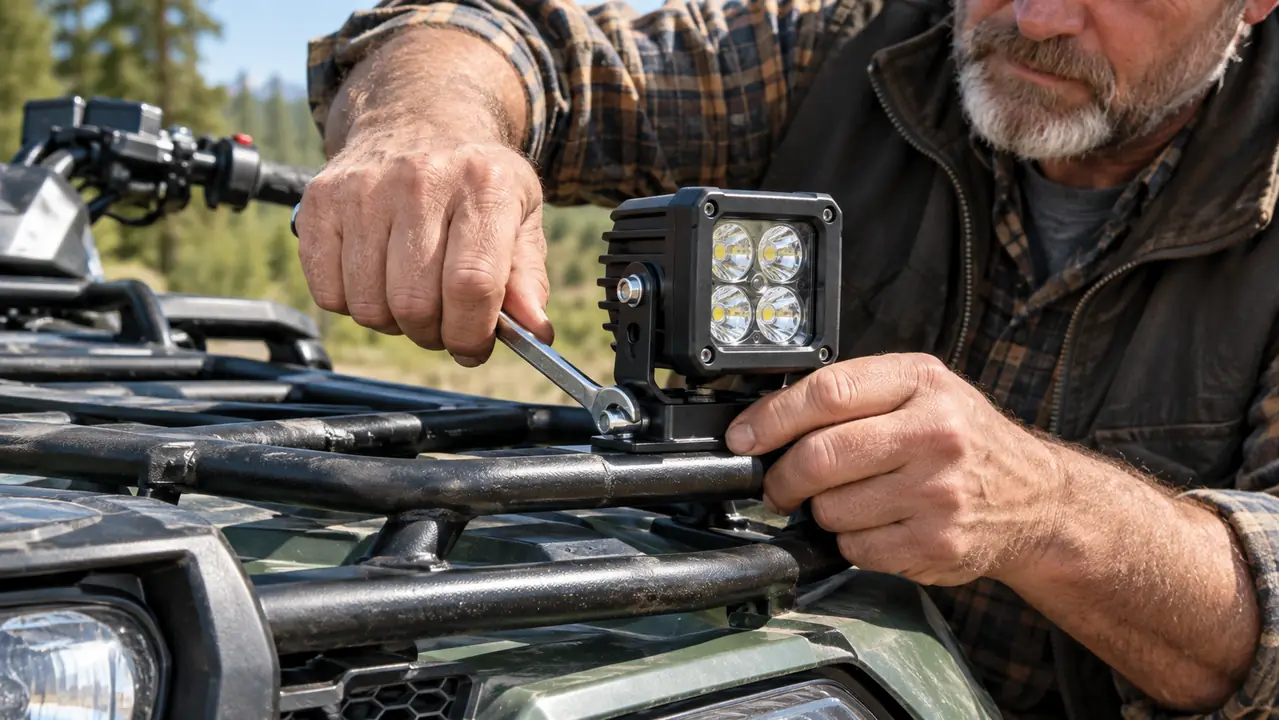
The first thing that got me was the price. You can buy the Nilight set for less than a single Rigid pod costs. I will not put a number on it because prices change, but the gap is huge. For a retired fabricator who rides every weekend, that matters. The Nilight set came with brackets, bolts, and a 12-foot wiring harness with a relay and fuse. I did not have to buy anything extra. I had it mounted in about an hour with basic hand tools, and the instructions were clear enough even for a guy who usually throws instructions away. The included wiring harness is sealed, and the relay clicks cleanly every time. I have not had a single issue with the switch or the fuse. The harness is 12 feet long, which is more than enough for a quad. I routed it along the frame and zip-tied it cleanly. The relay is a standard Bosch type, and the fuse is a blade fuse, easy to replace. The switch is a simple rocker with a green LED that glows when the pods are on. I mounted it on the left side of the handlebar, within thumb reach. The instructions showed a wiring diagram that made sense, and I did not have to cut any wires. Everything plugged together.
Mounting is another area where the Nilight set wins for most people. The brackets are not the fancy machined stuff you get with Rigid, but they are solid. I had to drill one hole per side on my Grizzly's front rack because the included brackets were designed for a round tube, but that took ten minutes. The pods swivel, so I could aim them exactly where I wanted. I set the flood pattern wide for trail edges and the spot pattern down the middle. After a full season of dust and vibration, they have not moved a millimeter. The hardware has not loosened, and the rubber gaskets are still doing their job. For the money, the mounting kit is a steal.
Reliability has been excellent too. I have put around 300 miles on the Nilight pods, and they have been through dust, rain, and temperature swings from 28 to 95 degrees. The lenses have not fogged, the seals have held, and the output has not dimmed. I had one minor scare in February when the switch felt stiff, but it turned out to be a bit of grit under the toggle. I blew it out with compressed air and it has been fine since. For a budget light, that is more than I expected. I have seen cheap lights fail after a month, and these have given me no reason to complain.
Where Rigid Industries Wins
Rigid builds lights like they expect them to survive the apocalypse. The housing is machined from a solid block of aluminum, not extruded and bolted together. The lens is a thick polycarbonate that will take a rock hit without cracking. My buddy's bar has been on his RZR for three years, through mud, snow, and dust storms, and it still looks new. The gaskets are the real deal. I have seen Rigid lights submerged in water crossings without a drop getting inside. That is not something I would try with the Nilight pods. The Nilight housing is good for the money, but it is not in the same league when you start talking about long-term abuse. The Rigid also has a lifetime warranty. I do not think I will ever need it, but it is nice to have.
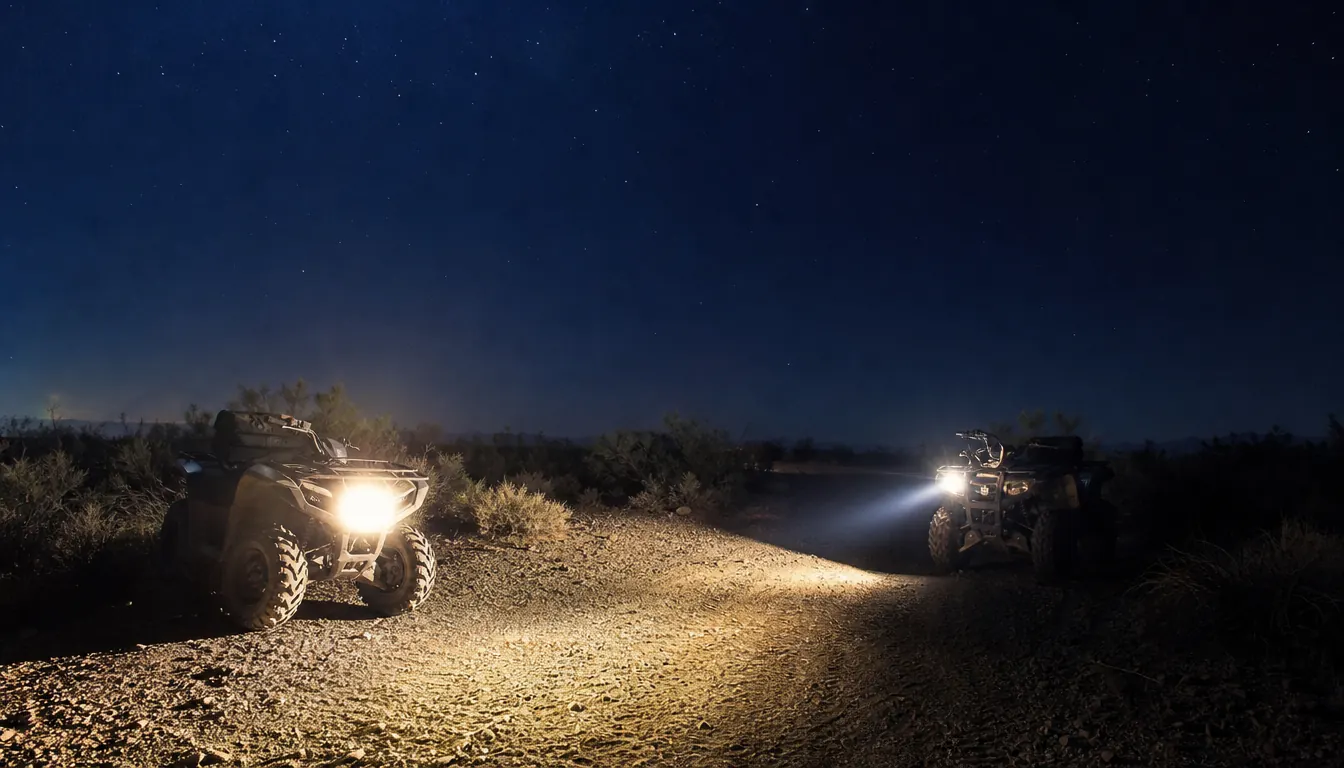
The beam pattern is where Rigid really earns its premium. The optics are engineered, and you can see it. The light from the Rigid bar is even, with a sharp horizontal cutoff that does not blind oncoming traffic if you aim it right. The Nilight combo beam is decent, but it has a hot spot in the center and the edges fall off quicker. On a moonless night on the fire road, the Rigid lit up about 100 yards of clear trail, while the Nilight did about 70 yards but with a noticeable hot spot in the middle. When you are running at speed over rough terrain, that clean pattern makes a real difference. It is less eye strain and you can pick out obstacles earlier. I noticed I could go a bit faster with the Rigid because the light was so much more usable. I measured the lux at 25 feet using a simple light meter app on my phone. The Nilight put out about 120 lux at that distance, and the Rigid put out about 180. The color temperature also differed. The Nilight is a bit warmer, more like 5000K, while the Rigid is closer to 6000K. That makes the Rigid appear whiter and brighter to the eye. The hot spot on the Nilight is not a deal breaker, but it is there. I also noticed the Rigid has a more even spread across the road, which reduces eye fatigue on long rides.
The warranty and resale value are also part of the Rigid story. Rigid backs their lights with a lifetime warranty, and they stand behind it. I have heard stories of people getting a replacement after a rock cracked a lens, no questions asked. My buddy Dave actually used it once. A branch took out a lens on his bar two years ago, and Rigid sent him a new one within a week, free of charge. That kind of support costs money, and it shows in the price. Also, if you ever plan to sell your machine, a Rigid light holds its value. I have seen used Rigid bars sell for more than a new Nilight set costs. That says something about the demand. For someone who keeps a rig for years and wants the peace of mind, that is worth the premium.
See today's price on the Nilight 2x60W pods
If you are on a budget and want reliable light for weekend rides, the Nilight set is hard to beat. Check the current price on Amazon and see if it fits your build.
Amazon Check Today's Price on Amazon →The Rigid is a better light. The Nilight is a better value for most riders.
Who Should Buy Which
If you are like me, you have one machine, you ride it most weekends, and you are not trying to win any races. You want to see where you are going after dark without emptying your wallet. The Nilight pods are the right call. They mount easy, throw plenty of light for a 25 mph trail ride, and if they get scratched or dinged, you are not out a mortgage payment. I would buy them again in a heartbeat. The guys I ride with have seen them in action, and a couple of them have already ordered the same set. One of them, Mike, put them on his older Polaris and has been running them for two months with no issues.
If you are building a rig for Baja or you spend weekends in the rocks where a broken light could end your trip, then spend the money on Rigid. The lifetime warranty and the bulletproof build are worth it when you are hundreds of miles from home. Also, if you ever plan to sell your machine, a Rigid light holds its value. I have seen used Rigid bars sell for more than a new Nilight set costs. That says something. But for the vast majority of weekend riders, the Nilight is the smarter buy. You get reliable light, an easy install, and you still have money left for gas and a six-pack. I have ridden with guys who bought cheap lights and replaced them twice in a year. The Nilight has lasted me a full season, and I expect it to last many more. That kind of reliability at this price is rare.
In the end, I kept the Nilight pods on my Grizzly. The Rigid went back to Dave, and he is happy with his choice. For my kind of riding, the Nilight does everything I need. I do not race, I do not do rock crawling at night, and I do not spend weeks in the backcountry. I ride fire roads and washes, and the Nilight lights them up just fine. If that sounds like you, save the money and get the Nilight. If you need the absolute best, you already know who makes it. That is the honest bottom line.
Grab the Nilight set for your next ride
Today's price is still the best value I have found in off-road lighting. Click below to see it on Amazon and check the current deal.
Amazon See the Nilight on Amazon →