
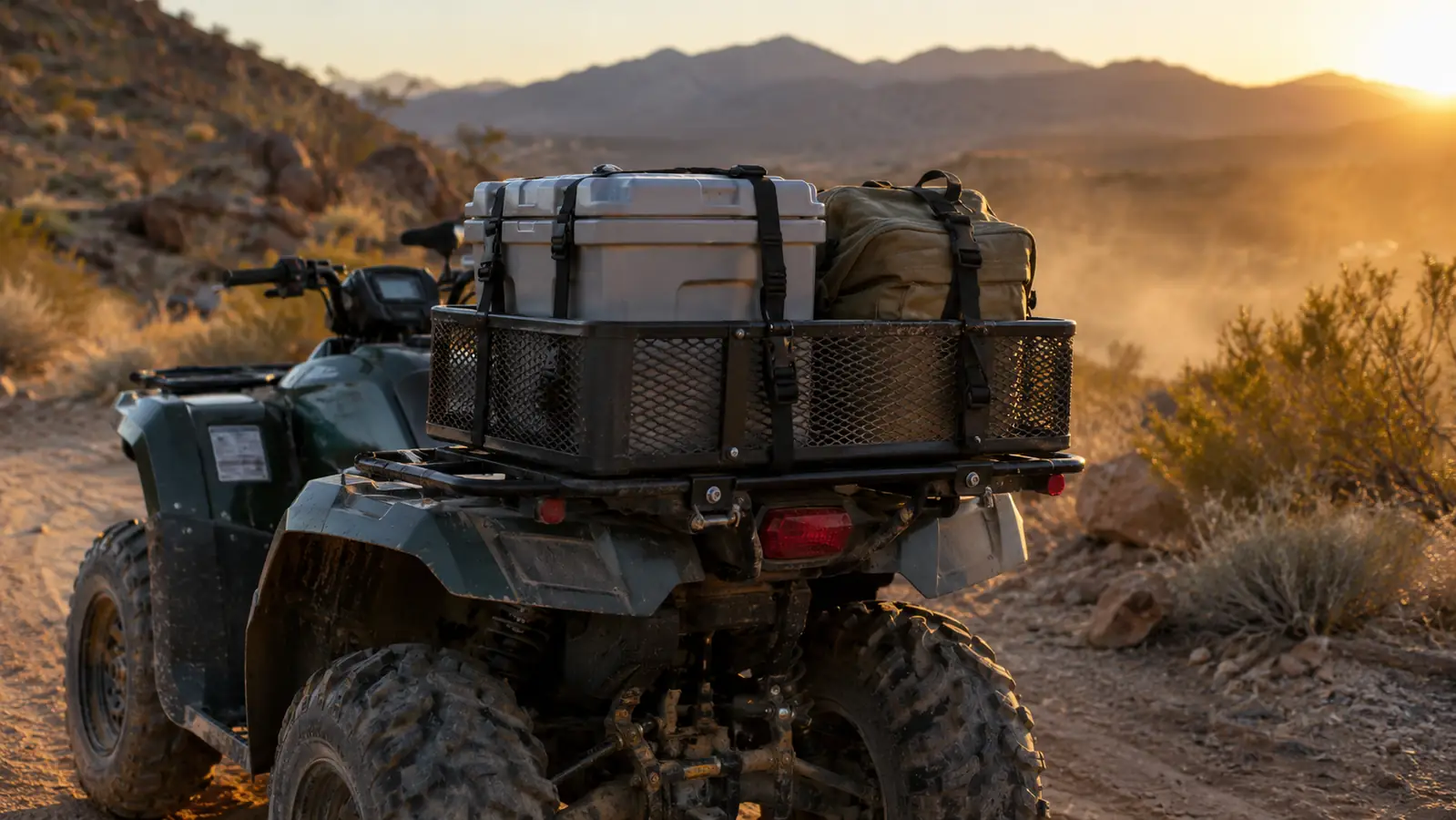
Last fall I got tired of ratchet-strapping a plastic tub to the rear rack of my Grizzly and watching it work loose on every wash crossing. The last straw was a trip in September when the tub slid off at the end of a whoop section and dumped a bag of tent stakes and a half-gallon of water across the trail. So I went looking for a proper cargo rack, and the two names that came up in every conversation with the guys I ride with were Titan Ramps and Kolpin. I bolted both to my 2019 Yamaha Grizzly 700 and ran them through a full season of desert washes, fire roads, and three overnight camping trips.
Here is the short version. The Titan Ramps rear cargo basket carries more, mounted easier, and held up better against dust, heat, and vibration than the Kolpin. The Kolpin is lighter and costs less, and if you only haul a small cooler on short afternoon rides, it may be all you need. For what I do, hauling camp gear two or three nights a year, the Titan Ramps won by a clear margin.
How I Tested Both Racks
I tested both racks on the same quad, the same 2019 Grizzly 700, over the same trails, so the only variable was the rack. I mounted the Titan Ramps first, in early October. It came out of the box with the basket, four U-bolts, four backing plates, and a handful of nuts and washers. The instructions were one page. I had it bolted to the factory rear rack in about thirty minutes, and that included a trip back to the garage for a longer 13 mm socket.
The Kolpin went on two weeks later. The mounting design is different. Instead of U-bolts that wrap the factory rack tubes, it uses a pair of brackets that bolt to the underside of the rack. On my Grizzly those brackets lined up with the factory holes, so it was a clean install, maybe twenty-five minutes. But a buddy with a slightly different model told me his needed an extra spacer kit, so the fit is less universal than the Titan Ramps.
I weighed both racks on the shop scale before mounting. The Titan Ramps basket came in at about 14 pounds. The Kolpin was closer to 9. That difference matters when you are lifting the rack on and off by yourself, and it matters on the trail because it is weight carried high and behind the rear axle. On a 700-class machine I could not feel it in the seat, but it is a real difference, not a spec sheet one.
I also spent one morning in the garage mocking up both racks on the bench before bolting anything on. I wanted to see how the welds looked and how the mesh was attached. The Titan Ramps welds are clean and consistent, with no spatter and no skipped spots. The Kolpin welds are acceptable but not as tidy, and the mesh on the Kolpin is a lighter gauge that flexes more under a hand press. None of that shows up on a spec sheet, but it is what a fabricator looks at first.
Over the season I put about 900 miles on the Titan Ramps rack and about 700 on the Kolpin. I carried the same loads on both: a 48-quart cooler, a canvas bag of firewood, a duffel of camp gear, and on one trip a 5-gallon jerry can of water. I also ran both racks empty on fast fire road stretches to see how much noise they made and how they handled vibration. The Titan Ramps stayed quiet. The Kolpin developed a rattle at the bracket on the third trip, and I had to tighten one bolt.
The loads were the same, but the results were not. The first wash crossing with the Titan Ramps loaded, I pulled over and checked the U-bolts by hand. They had not moved. Two weekends later, with the Kolpin carrying the same cooler, I found the rear bracket bolt had backed off a half turn by the end of the ride. It is a five-minute fix with a wrench, but it is the kind of thing that makes you check your gear before every ride.
| Titan Ramps Rear Cargo Basket | Kolpin Cargo Rack | |
|---|---|---|
| Rated capacity | 150 lb, carries a full camp load | About 100 lb, fine for a cooler and a duffel |
| Rack weight | About 14 lb, heavier steel | About 9 lb, easier to lift on and off |
| Mounting | Universal U-bolts, fits most factory racks, about 30 minutes | Model-specific brackets, some machines need a spacer kit |
| Weather resistance | Powder coat held through a full desert season | Paint chips where straps rub, bare steel at the corners |
| Small gear retention | Mesh sides keep bottles and gloves in place | Flat platform, small items need a net or bag |
| Price | Higher upfront cost | Usually the cheaper option |
| Warranty | One year | One year |
Where Titan Ramps Wins
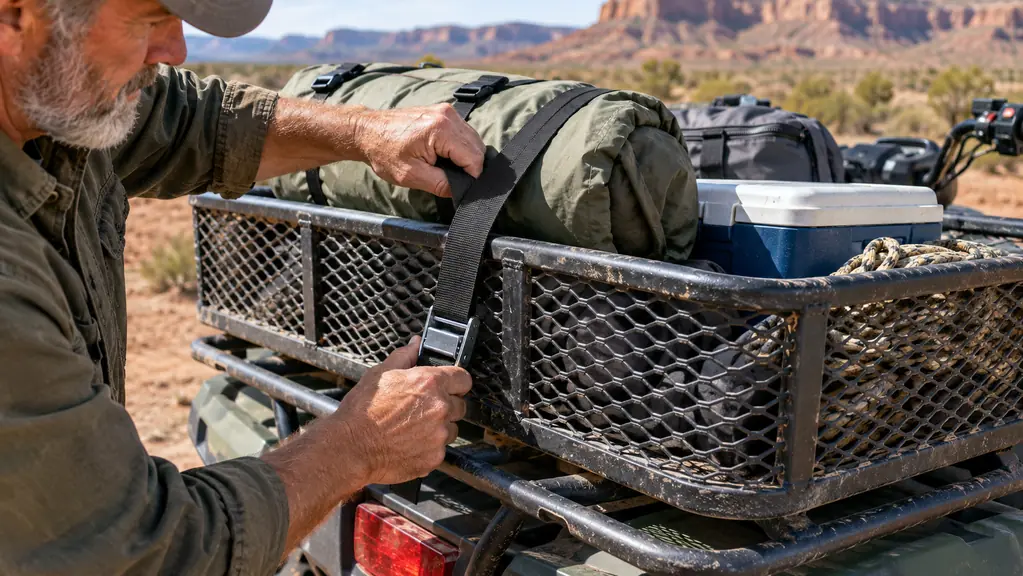
Capacity is the headline. The Titan Ramps rack is rated for 150 pounds, and I have had it right at that number without a complaint. The best test was the November camping trip. I loaded the 48-quart cooler, a canvas bag of firewood, and the duffel, which put me right around 145 pounds by the bathroom scale. I ran that load over a mile of whooped-out wash and the rack never shifted, never rattled, and the U-bolts stayed tight. I checked them when I got home and did not need to touch them.
The mounting hardware is where a fabricator notices the difference. Titan Ramps uses U-bolts that wrap around the factory rack tubes, the same principle as a good trailer hitch. That spreads the load across the whole tube instead of concentrating it on two small bolts. The Kolpin brackets work, but they hang the entire basket off four small bolts on the underside, and on a rough trail that is more stress on fewer points. In my trade, that is the difference between a mount that holds and a mount that eventually cracks.
The mesh sides do real work. On the December trip I carried a one-gallon water jug and a pair of work gloves loose in the basket, and both stayed put over a stretch of washboard that would have bounced them off a flat platform. The mesh also lets dust fall through instead of collecting in the bottom, which keeps the load cleaner and keeps water from pooling if you get caught in a shower.
The finish has held up too. After a full season of desert sun, dust, and the occasional branch scraping across it, the powder coat is intact. There is one small rub mark where a strap wore against a corner, but it is in the coating, not down to bare metal. I have seen cheaper racks go rusty at the welds by spring. This one still looks like the day it came out of the box.
The other thing I like is how the Titan Ramps sits on the Grizzly. It is level with the rear rack, so the load stays put instead of leaning back over the tail. That keeps the center of gravity lower and makes strapping easier because you are not fighting an angled platform. The Kolpin sat a touch higher on my machine and a cooler wanted to slide back toward the tail until I added a second strap.
Where Kolpin Wins
The Kolpin is lighter, and lighter is a genuine advantage. At 9 pounds it is about 5 pounds easier to lift on and off the rack, which matters when you are wrestling it at the end of a long day or pulling it off to clean the machine. That weight also sits high and behind the rear axle, so on paper the Kolpin saps a little less of the quad's stability on steep side slopes. In practice, on a 700-class machine, I could not feel the difference, but the lighter rack is the better choice if you are on a smaller quad.
It also costs less, and there is no shame in that. If your load is a small cooler and a duffel on short rides, the Kolpin's 100-pound rating is plenty, and the lighter build makes it the easier rack to live with day to day. The paint does chip where straps rub, and I did see surface rust start on one mounting bolt by spring, but that is cosmetic and a dab of paint handles it. For a rider who does not push the load limit, the Kolpin is a fair deal.
The rattle I mentioned is worth knowing about. The Kolpin bracket developed a looseness on the third trip, and once I tightened it, it stayed quiet for the rest of the season. But I checked it before every ride after that, and that is one more thing in the back of your mind. On a rack that mounts with four bolts, a little attention to those bolts is the price of the lighter build.
The rack that carried every camp load I threw at it
The Titan Ramps rear cargo basket held 145 pounds through a mile of whooped-out wash without shifting a bolt. If you haul a full camp load the way I do, this is the one that earns its place on the quad.
Amazon Check Today's Price on Amazon →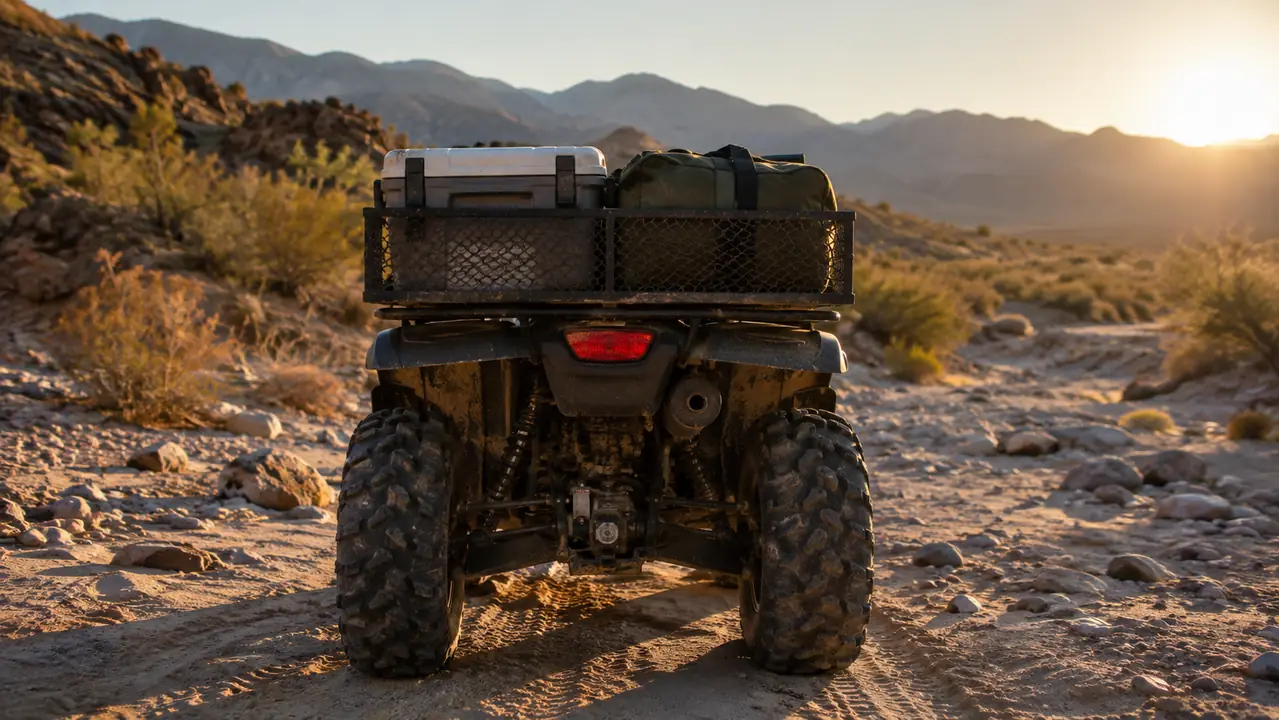
Who Should Buy Which
Buy the Titan Ramps if you carry a real camp load, ride rough trails, or leave the rack on the quad through the season and want a finish that does not quit. The 150-pound rating, the U-bolt mount, and the mesh sides all pull their weight the first time you strap a cooler on and hit a whoop section. It mounted in half an hour, it has not come loose in nine months, and it is the rack I keep on the Grizzly.
Buy the Kolpin if you ride mostly short trips, your load is a small cooler and a bag, and you want the lighter, cheaper option. The lower rating and the paint that chips are real tradeoffs, but if you are not loading it to the brim, you will likely never notice either. It mounted clean on my machine, it carried everything I put on it, and it does the job it is priced for. It just is not the rack for a full camp load on rough ground.
There is also the question of how hard you ride. I take the Grizzly into washes that bounce the suspension hard, and I want hardware that does not make me think about it. If your riding is gentler, fire roads and easy trails, the difference in mounting and finish matters less and the Kolpin becomes a more reasonable pick. Match the rack to the worst day you plan to have, not the average one.
What a Season of Dust and Heat Does
Nine months in the high desert tells you what a rack is made of. The Titan Ramps has sat on the Grizzly through summer heat over 100 degrees, winter mornings in the 20s, and dust storms that coat everything in a fine film. I have hosed it off twice. The powder coat is still intact, the welds are clean, and every bolt came out easy when I pulled it off to check the frame in the spring.
The Kolpin spent the same season on the same quad and showed its age sooner. The paint chipped where the strap rubbed on the front edge, and the bare steel underneath picked up surface rust by March. One mounting bolt rusted enough that I replaced it. None of it stopped the rack from working, and it still carried the load fine. But if you want a rack that looks like new after a year, the Titan Ramps finish is the difference.
Stop strapping the cooler to the rack and hoping
A real cargo basket changes how you pack for a trip. The Titan Ramps rack bolted on in thirty minutes and has held 145 pounds without a single loose bolt since October. If you haul camp gear the way I do, this is the one.
Amazon Check Today's Price on Amazon →