Every winch review you will read starts the same way. The guy tells you the winch sat on his quad for six months before he needed it. Then he tells you the story of the one day it mattered, how it pulled him out of a wash, and how he has never doubted the purchase since. That is the review the seller wants you to read. Here is the one the seller hopes you never see. I ran the Champion Power Equipment 3000-lb. winch on my 2019 Grizzly for fourteen months, through two desert summers and one winter, and I kept notes the whole time. I am not going to tell you it is the only winch you should buy. I am going to tell you exactly what it does well, what it does badly, and what I would change if I did it over. Some of it you will like. Some of it you will not.
I should be clear about how I tested it. I am Cal Mercer, I am 58, and I have been riding quads in the high desert outside Ridgecrest, California for thirty years. I bought this Champion Power Equipment winch because the Grizzly is heavy and I ride alone through washes where the sand gives out without warning. I mounted it myself in my garage with a MIG welder and a bench vise, which means I noticed every weak bracket and every undersized bolt before the thing ever saw dirt. This is not a lab test. This is a working review from a guy who uses a winch the way most owners actually do: rarely, but hard, and usually when something is already wrong.
The Quick Verdict
A solid, honest 3000-lb winch that does the job if you respect the duty cycle and do a little maintenance. It runs hot, the steel cable kinks until it is broken in, and the factory bolts are the weak point, but it has never left me stuck.
Amazon Check Today's Price →Ready to stop trusting luck in a soft wash?
If you ride alone in sand or mud, a winch is the difference between a ten-minute fix and a long walk. See what the Champion Power Equipment 3000-lb kit is going for today on Amazon.
Amazon Check Today's Price on Amazon →How I've Used It
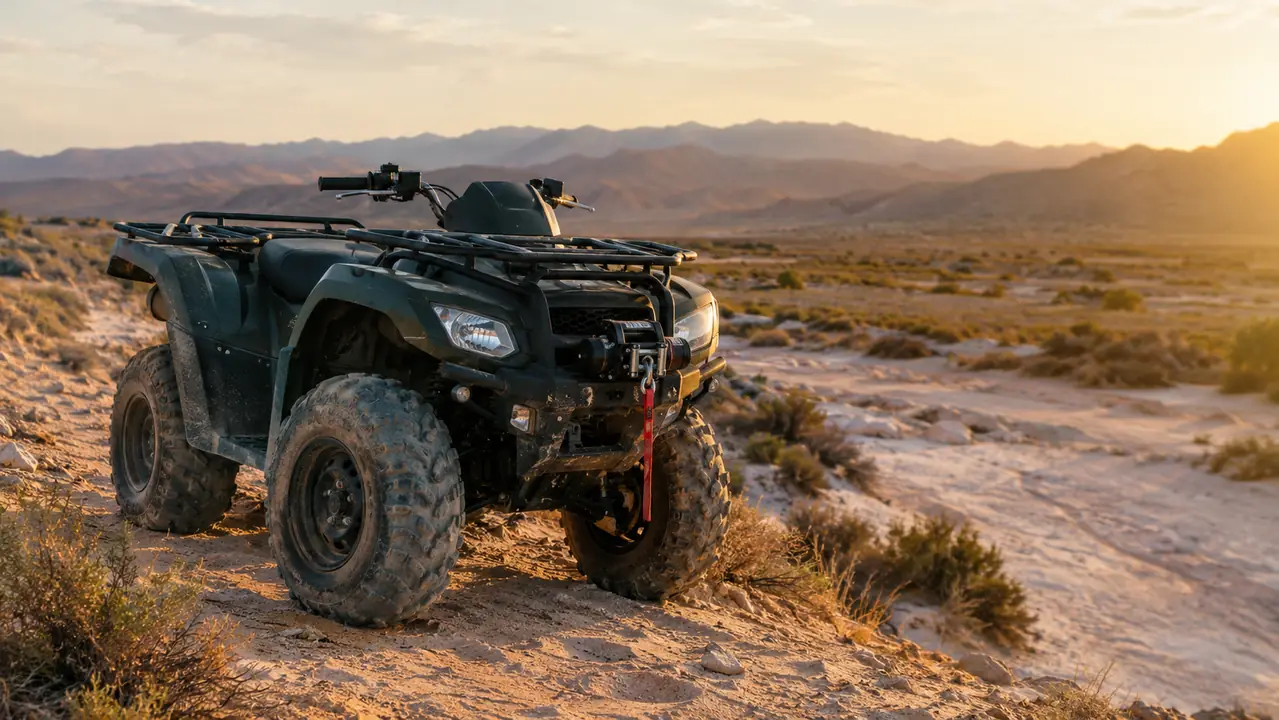
I mounted the winch in October of last year. The kit comes with the winch, the steel cable, a fairlead, the mounting plate, a remote, and the wiring harness. Everything you need is in the box, which is more than I can say for some kits that expect you to buy a solenoid separately. The mounting plate is thicker than what I have seen on cheaper winches, and the hardware held up fine. I did replace the bolts that came with it because the factory ones were the weak point, but more on that later.
In the fourteen months since, I have used the winch for real maybe a dozen times. Twice to pull the Grizzly out of sand that gave way under the tires. Three times to pull dead camp gear up a slope. Once to pull a friend's quad out of a wash, which is the kind of use that sells you on having a winch at all. The rest of the time it has sat on the front rack under a layer of desert dust, which is exactly the life most winches live. So this review is really about two things: how it works when you need it, and how it survives the months when you do not.
What Nobody Tells You About the Motor Heat
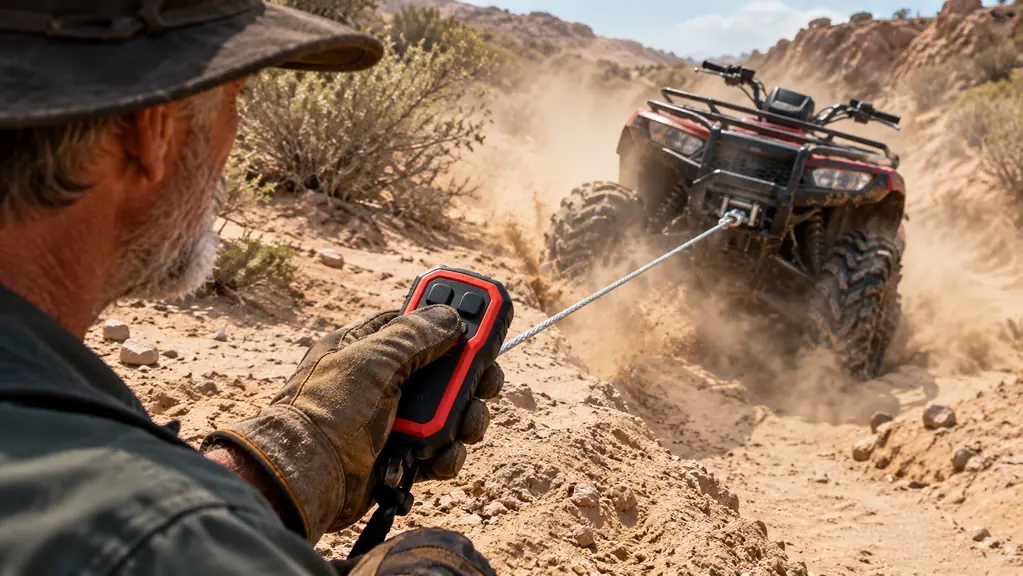
The first thing nobody tells you about any electric winch is the duty cycle. This one is rated for one minute of pulling at full load, then it needs to rest. That is not a flaw in this particular winch. That is how every winch in this class works, and the Champion Power Equipment kit is no different. The manual says it plainly. The problem is that nobody reads the manual, and nobody tells you that the motor gets genuinely hot to the touch after a single hard pull. I learned this the hard way on a hot day in June when I winched the Grizzly out of a soft spot and then immediately tried to do it again for a friend. The motor stopped responding for a good ten minutes. It was not broken. It was hot. Give it a rest and it comes back.
That is the thing the marketing photos never show you. A winch is not a tool you can run continuously. It is a tool that works in bursts. If you are the kind of rider who gets stuck in deep mud and expects to winch for five minutes straight, you will be disappointed. You have to learn to pull, pause, let the motor cool, and pull again. That is not a dealbreaker. It is a fact of life with every winch in this class. But it is the kind of fact that only shows up after you own one, and I am telling you now so you do not think something is wrong when your winch quits on you mid-pull.
The Cable, and What It Does When You Actually Pull
This winch ships with steel cable, not synthetic rope. That is a point of pride for some owners and a point of frustration for others, and both sides are right. Steel cable is cheaper, it does not fray the way synthetic can, and it shrugs off the kind of rock and brush you drag a cable across in the desert. But steel cable has a personality. It kinks. It throws off tiny wire splinters when it is new and you are handling it bare-handed, and it holds a memory of the way it has been coiled. After a few hard pulls, my cable developed a set of kinks that made it want to re-spool in a certain way. That is normal. You work around it by re-spooling under tension and by taking the kinks out by hand.
The other thing nobody tells you about steel cable is stretch. A 3000-lb winch with a short cable does not stretch much, but it does stretch, and that stretch is what makes a winch feel like it is barely moving when you are pulling a stuck machine up a slope. The first time I used this winch, I thought something was wrong because the cable seemed to stretch a few inches before the quad actually started moving. That is not a defect. That is the cable doing what cables do. Give it tension, let it settle, and then it starts pulling for real. It took me two or three uses to trust it, and I want you to know it is normal before you are standing in the desert wondering if you wasted your money.
Mounting It: What the Box Doesn't Prepare You For
The kit comes with a mounting plate, and the plate fits the Grizzly fine. The holes lined up, which is more than I can say for some aftermarket brackets I have wrestled with over the years. But here is what the box does not prepare you for: the hardware. The bolts that came with my kit were the weakest part of the whole setup. They are not terrible, but they are not the kind of bolts I trust to hold a winch that might have to pull a ton and a half of quad and rider out of a hole. I replaced them with grade 8 bolts from my own bench before I ever used the winch for real. That is a ten-minute job, and it is the single best thing I did to this winch.
The mounting position also matters more than the kit lets on. The winch mounts on the front rack, which puts the cable line low and tight against the fairlead. That is fine for most pulls. But if you mount it and the cable rubs against the rack at an angle, you will wear a groove in the cable over time. I had to reposition my fairlead by about a quarter inch to get a clean straight line from the drum to the hook. That is the kind of thing you only notice after a few uses, and it is the kind of thing that makes the difference between a winch that lasts and a winch that eats its own cable.
The Remote and the Wiring
The remote is a simple handheld unit that plugs into the winch with a coiled cord. It works. The buttons are big enough to press with gloves on, which matters in the desert in January, and the cord is long enough to stand clear of the cable while you winch. I have two complaints. The first is that the cord is the kind that can get pinched if you are not careful about where you route it. The second is that the remote lives in a plastic housing that does not feel like it would survive a hard drop. I dropped it once, on the gravel in front of my shop, and it survived. But I keep it in a dry bag now because I do not trust it to live loose on the rack for a season of dust and vibration.
The wiring harness is straightforward. There is a solenoid, a battery hookup, and a switch. I have wired more than a few accessories on this quad, and this was one of the easier jobs. The instructions are decent, which is rare. The one thing I would tell you is to route the power cable away from anything that gets hot and to use the included fuse block properly. A winch draws a lot of current, and if you skimp on the wiring, you will get a winch that works intermittently or a battery that drains overnight. I did not have either problem, but I have seen it happen on other quads, and the cause is almost always the install, not the winch.
The Pulls I Actually Made
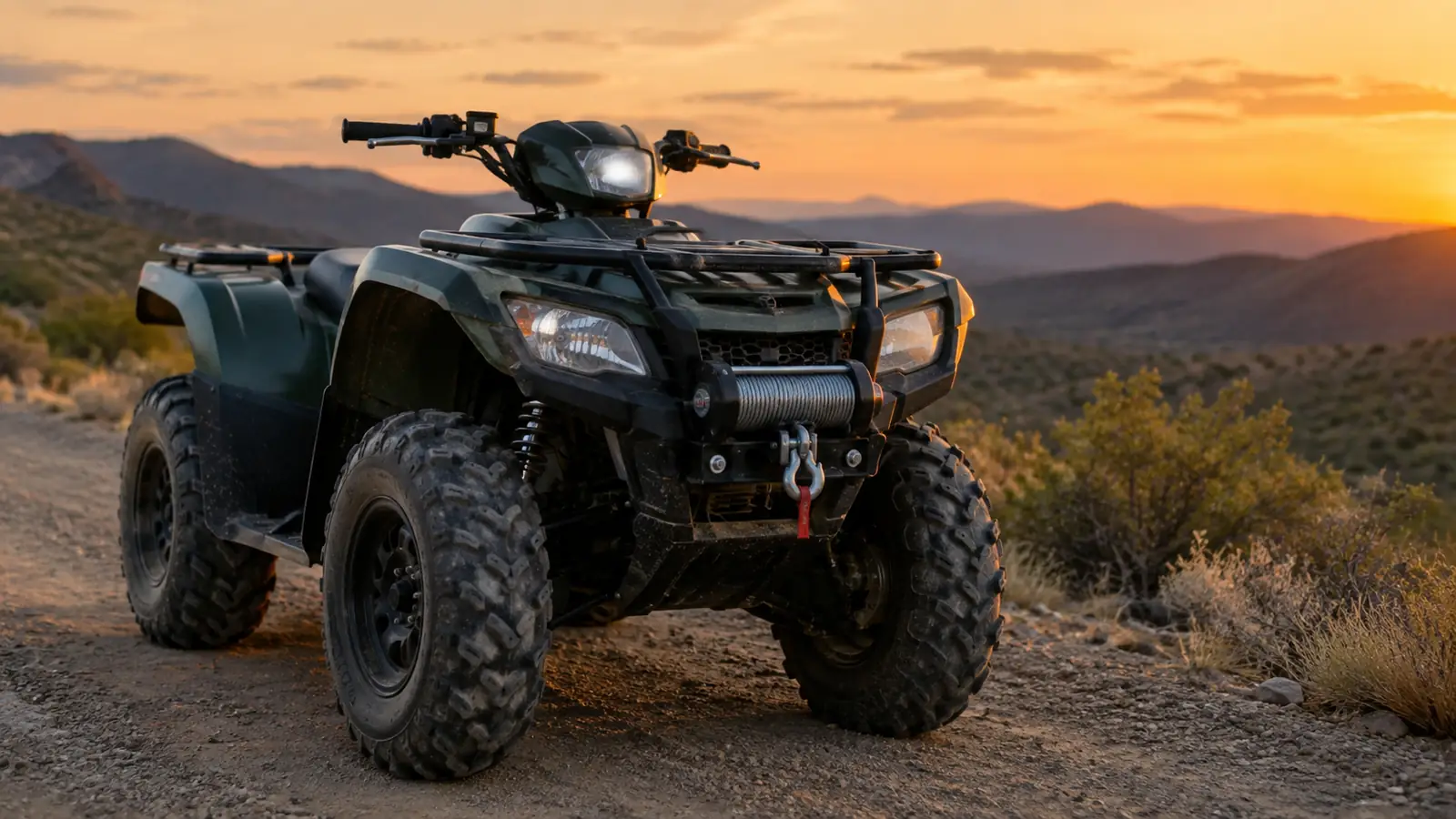
The real test of any winch is the pull. I have pulled the Grizzly out of sand, pulled a friend's quad out of a wash, and once pulled a dead deer stand trailer up a short slope. In every case, the winch did the job. The pull is steady, the brake holds, and the free-spool works the way it should. The winch is rated at 3000 pounds, which is honest for a machine like the Grizzly. You want a winch rated above the weight of your quad, and 3000 pounds is right for a 700-class machine. I would not put this winch on a heavy side by side or a truck, but for a quad it is the right size.
The thing I noticed on the hard pulls is that the winch is loud. Not annoyingly loud, but loud enough that you notice it. The gear train whines under load, which is normal for this class of winch, but it is the kind of sound that makes you check that everything is still tight. It is. The fairlead does its job, the cable spools evenly when you re-spool under tension, and the hook is solid. After fourteen months and a dozen real pulls, the winch has not failed me once. That is the honest headline: it works. The caveats are the heat, the duty cycle, and the fact that you have to maintain it a little.
What I Liked
- Complete kit in one box: winch, cable, fairlead, plate, remote, wiring
- Mounting plate fits a Grizzly with zero drilling
- Steady, honest 3000-lb pulls that have never left me stuck
- Decent instructions and a straightforward electrical hookup
- Survived fourteen months of dust, heat and vibration without failing
Where It Falls Short
- Motor runs hot and the duty cycle is short; it stops responding if you push it
- Steel cable kinks and throws splinters until it is broken in
- Factory bolts are the weak point; replace them before first use
- Remote housing feels cheap and the cord can pinch
- Loud under load, and the fairlead may need repositioning for a clean line
Fourteen months and a dozen real pulls, and this winch has not failed me once. The caveats are the heat, the duty cycle, and the fact that you have to maintain it a little.
What Annoyed Me Over Fourteen Months
I want to be straight with you about the annoyances, because they are the things the reviews skip. The duty cycle is the big one. If you are winching in deep sand on a hot day, you will hit the heat limit and the winch will stop. It comes back after a rest, but it is the kind of thing that makes you plan your pulls instead of just cranking. The second annoyance is the cable. Steel cable is durable, but it is a pain when it is new. The kinks and the splinters are real, and you have to handle it with gloves the first few times. I switched to wearing leather work gloves every time I use it, and that solved most of it.
The third annoyance is the remote. It works every time, which is the important part, but the housing feels like the weakest thing in the kit. I do not think it would survive being run over or dropped on a rock. I keep it in a dry bag and that is fine, but I mention it because you should know before you buy that you will want to protect it. The last annoyance is the noise. It whines under load. That is normal, but it is loud enough that the first time you hear it, you will wonder if the gearbox is about to come apart. It is not. It is just how this class of winch sounds.
Who This Is For
Honestly, the Champion Power Equipment 3000-lb. winch is for the rider who gets stuck, does not want to wait for a buddy, and wants a winch that works without a lot of fuss. If you ride a quad in the 600 to 800 class, if you ride in sand, mud, or anything that can grab a tire, and if you are comfortable doing a little basic maintenance, this is a solid choice. It is also for the rider who wants the whole kit in one box. You are not going to chase down a solenoid or a fairlead separately. Everything is there, the instructions are decent, and a competent weekend mechanic can have it mounted in an afternoon.
Who Should Skip It
If you ride a machine that weighs more than this winch is rated to pull, skip it. If you are expecting to winch continuously for long stretches, skip it, because no winch in this class does that. And if you do not want to think about maintenance at all, skip it, because a winch is a tool that needs care. You have to keep the cable clean, keep the bolts tight, and check the electrical connections now and then. That is not unique to this winch. It is true of every winch. But it is the truth that the marketing never mentions, and you should hear it before you buy, not after.
The bottom line, in plain terms
If you want a winch that pulls when it counts, fits a Grizzly with no drilling, and does not cost a fortune, this is a smart pick. See today's price on Amazon and decide for yourself.
Amazon Check Today's Price on Amazon →